This post is about one of the biggest gold stampedes. It needs a map and a some context: July 1897. America was in a depression with high unemployment when ships arrived in Seattle and San Francisco with lots of GOLD from the Yukon. The Yukon Gold Rush was on! (the discovery of gold actually happened almost a year previously but few knew about it). If you were wealthy enough you could take a ship and sail from Seattle or San Francisco all the way up to the Yukon River at the Bering Sea and then upstream on the Yukon to Dawson City, at least 4,000 miles but relatively easy for the traveler. There were less expensive but far more difficult routes to the Yukon gold fields. Eleven days after news of gold arrived in San Francisco, Jack London convinced his sister to mortgage her home for Jack to buy 2,000 pounds of supplies and book passage on a steamship to Juneau, Alaska. From Juneau he hired local indigenous canoers to paddle 100 miles up the Lynn Canal to Dyea, Alaska. The town of Dyea is now gone with little remaining (because it was mostly a “tent town”). Dyea has a shallow harbor on the outwash delta of the Taiya River. The nearby town of Skagway was the other choice and is on a deep water harbor. Today cruise ships anchor at Skagway. The map below shows the two competing routes from the north end of the Lynn Canal to Bennett Lake. Jack London and everyone headed to Dawson City included woodworking tools because Bennett Lake is the beginning of the Yukon River. They had to build a crude boat on the shore of the lake. It is about 500 miles to Dawson City by the Yukon River.
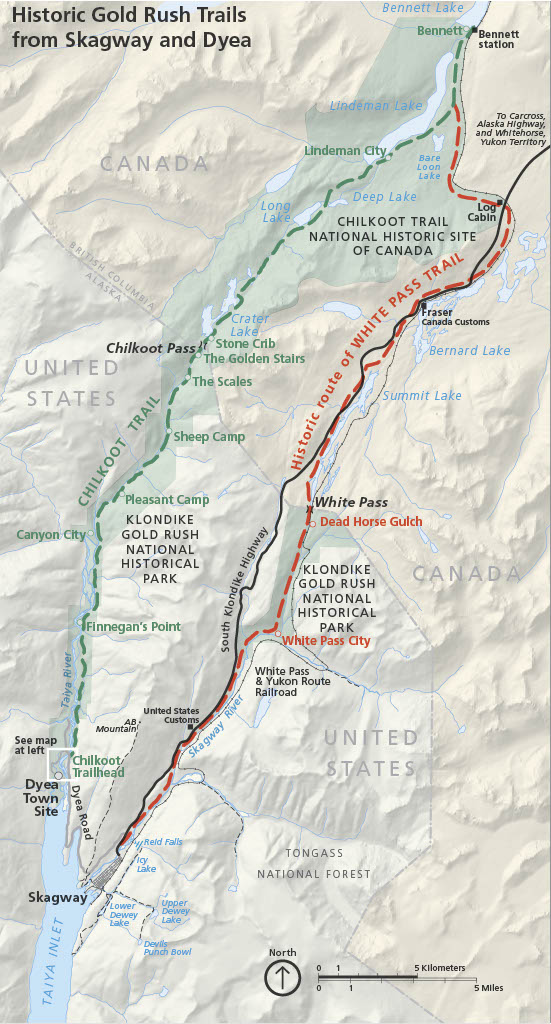
The two routes compared:
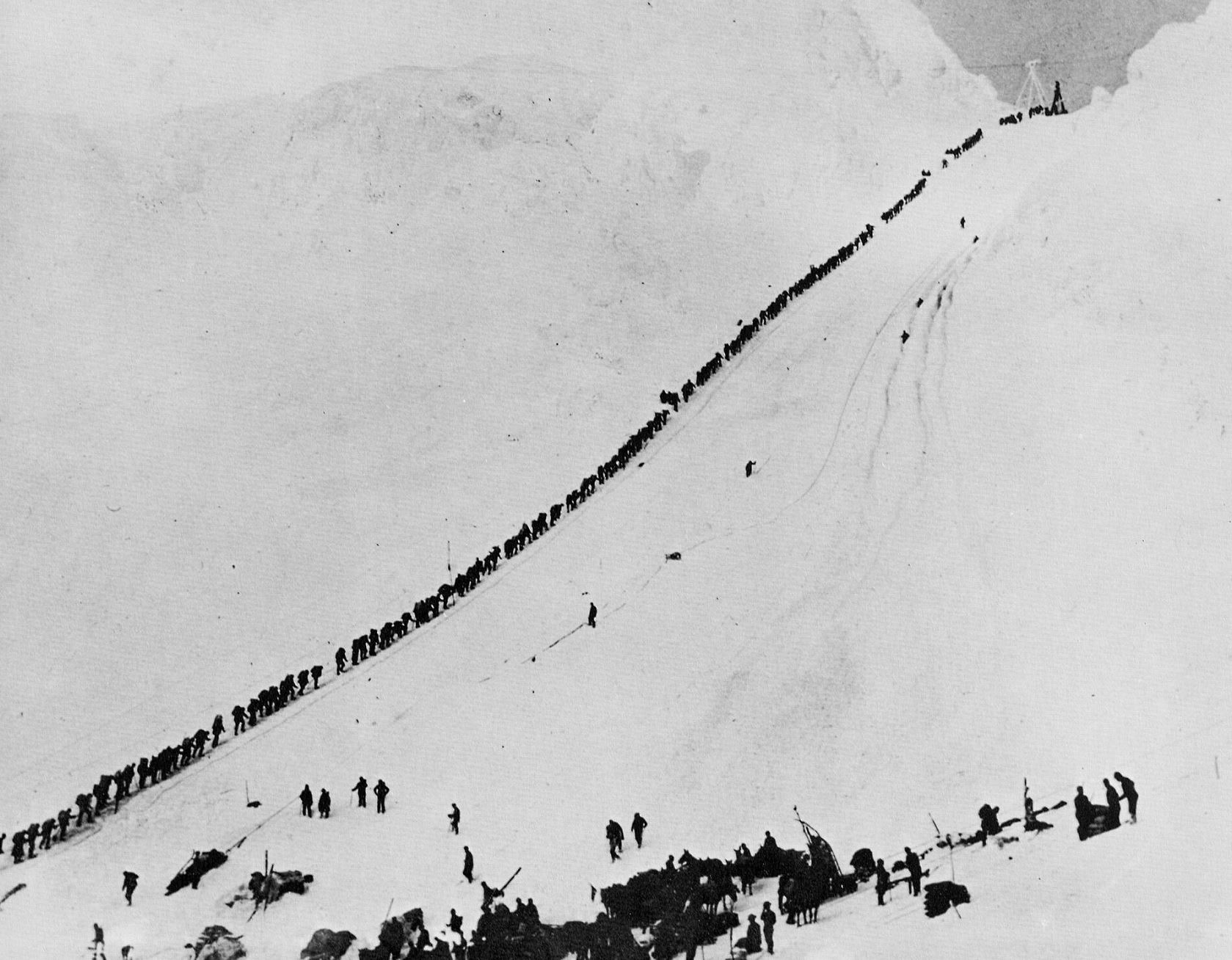
1. The Chilkoot Trail started at Dyea and was the shorter route. This route is famous for the pictures of stampeders climbing the “Golden Stairs” to Chilkoot Pass at the Canadian border. This route was entirely by foot as pack animals could not navigate the steep, icy terrain.
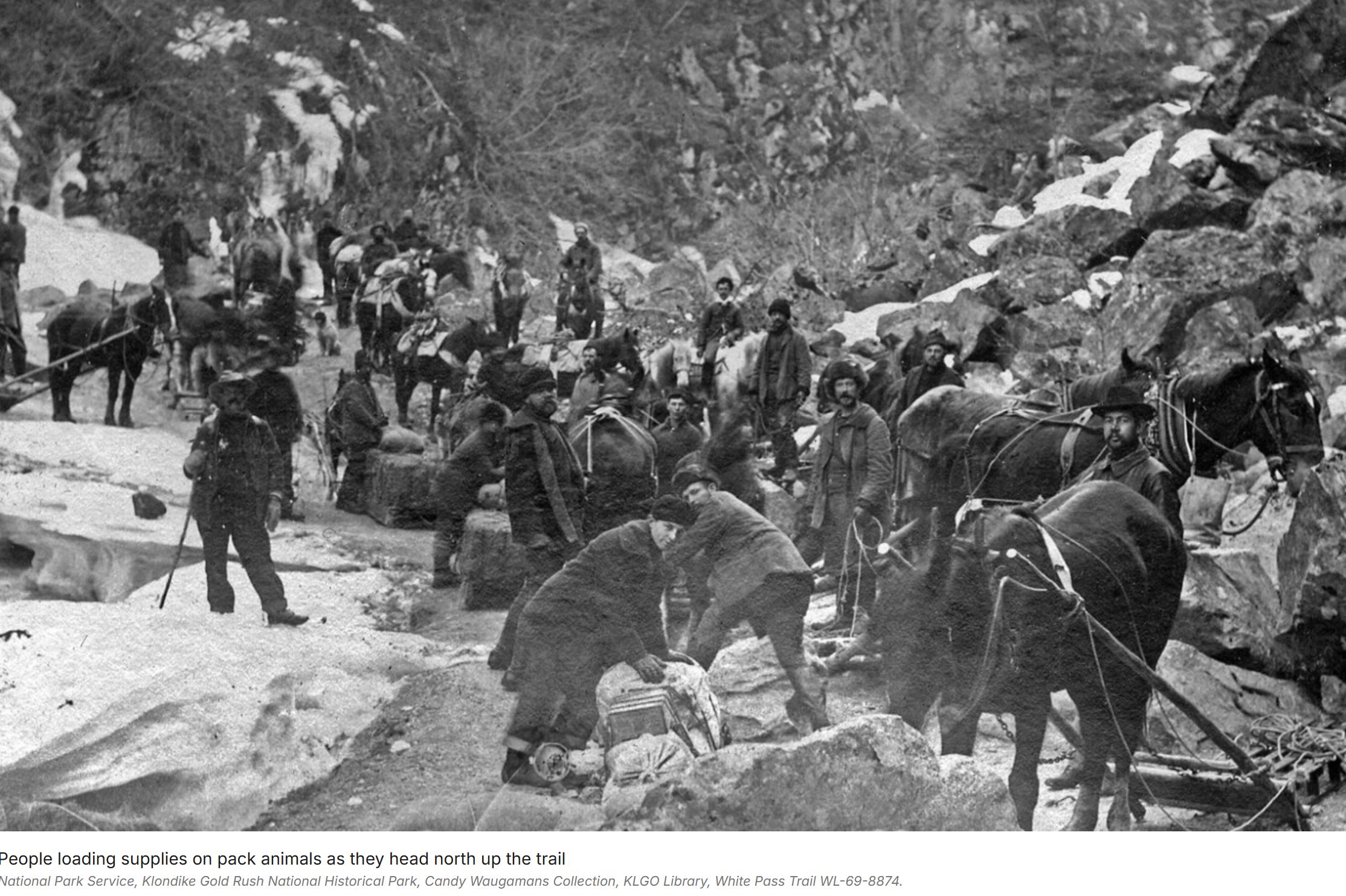
2. The White Pass Trail started at Skagway and while a longer route could be navigated by pack animals, mostly horses. An estimated 3,000 horses died along the route with carcasses and bones a frequent site.
“The horses died like mosquitoes in the first frost and from Skagway to Bennett they rotted in heaps. They died at the rocks, they were poisoned at the summit, and they were starved at the lakes; they fell off the trail, what there was of it, and they went through it; in the river they drowned under their loads or were smashed to peices against the boulders; they snapped their legs in the crevices and broke their backs falling backwards with their packs; in the sloughs they sank from fright or smothered in the slime; and they were disemboweled in the bogs where the corduroy logs turned end up in the mud; men shot them, worked them to death and when they were gone, went back to the beach and bought more. Some did not bother to shoot them, stripping the saddles off and the shoes and leaving them where they fell. Their hearts turned to stone- those which did not break- and they became the beasts, the men on the Dead Horse Trail.” -Jack London, Journalist.
Of course enterprising people quickly figured out that an easier way to the gold fields would be a train. Train tracks were quickly blasted along the edge of the canyon following the White Pass Trail. The narrow gauge train track (3′ wide) was finished only 3 years later from Skagway to Whitehorse by July of 1900. The train eliminated the deaths of horses on the trail but missed most of the Yukon gold rush because that was over by the time it was completed.
The train continued to be an important part of access to the Yukon interior for travelers but was mostly used for hauling silver, copper, and lead ore out of the interior to the Skagway port. The huge gold dredges and other mining equipment came up the White Pass & Yukon Railroad. During WWII the railroad brought much of the equipment and supplies to Whitehorse for the construction of the Alaskan Highway. After being abandoned around 1982, the railroad was rehabilitated in 1988 and reopened as a heritage and scenic railway. Now the railway only runs from Skagway to Carcross (not all the way to Whitehorse). It was this railway that we traveled on our trip.

We boarded a tour bus at our Whitehorse, Yukon campground in the morning and stopped for a coffee and pastry break in the small town of Carcross (also Yukon). The bus then stopped in the town of Fraser (British Columbia) where we boarded the White Pass & Yukon Route Scenic Railway. The bus trip was 88 miles. The train ride from Fraser to Skagway was 28 miles. Picture above is the train rounding a curve somewhere near the summit of the White Pass.

Remnants of the Gateway depot stop. The train engines are now diesel powered but some of the water tanks serving the original steam engines remain.

It was an overcast day with a few rain showers. Some areas were thick with fog.

This old trestle bridge is abandoned.

The steel bridge that replaced the old trestle.

Entering one of the tunnels.
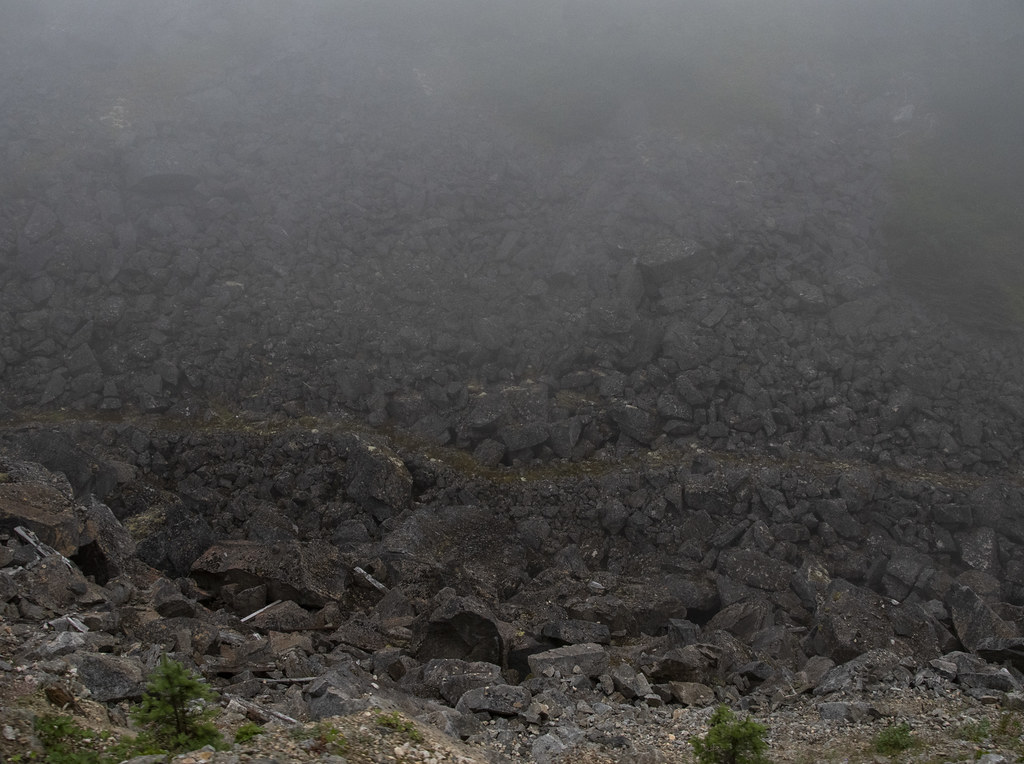
This is the view looking down into the canyon (Dead Horse Gulch) from the railroad above. That trail through the rocks is the “Trail of ’98” also know as the “Dead Horse Trail”. The Dead Horse name came from the thousands of pack horse and mule carcasses that littered the trail as gold rush miners attempted to bring one ton (2,000 pounds) of food and supplies from the port at Skagway, up the rocky, narrow trail to the White Pass and on to the headwaters of the Yukon River. The one ton was based on 3 pounds of food a day for one year plus clothing, firearms, tools, and other survival gear. A man could only carry a 50-80 pound backpack up the icy trail. Assuming an 80 pound pack it would take 25 round trips back and forth. On the shorter 33 mile Chilkoot Trail that would amount to 1,650 miles of hiking (half of it with an 80 pound pack).

Another glimpse of the ’98 trail.

Trail marker.


Misty Canyon.

Crossing a wooden trestle.


“Downtown” Skagway. The railway used to run right down the middle of this road.


We ate lunch here with Mike and Amy.

We bought a watercolor print in this shop.
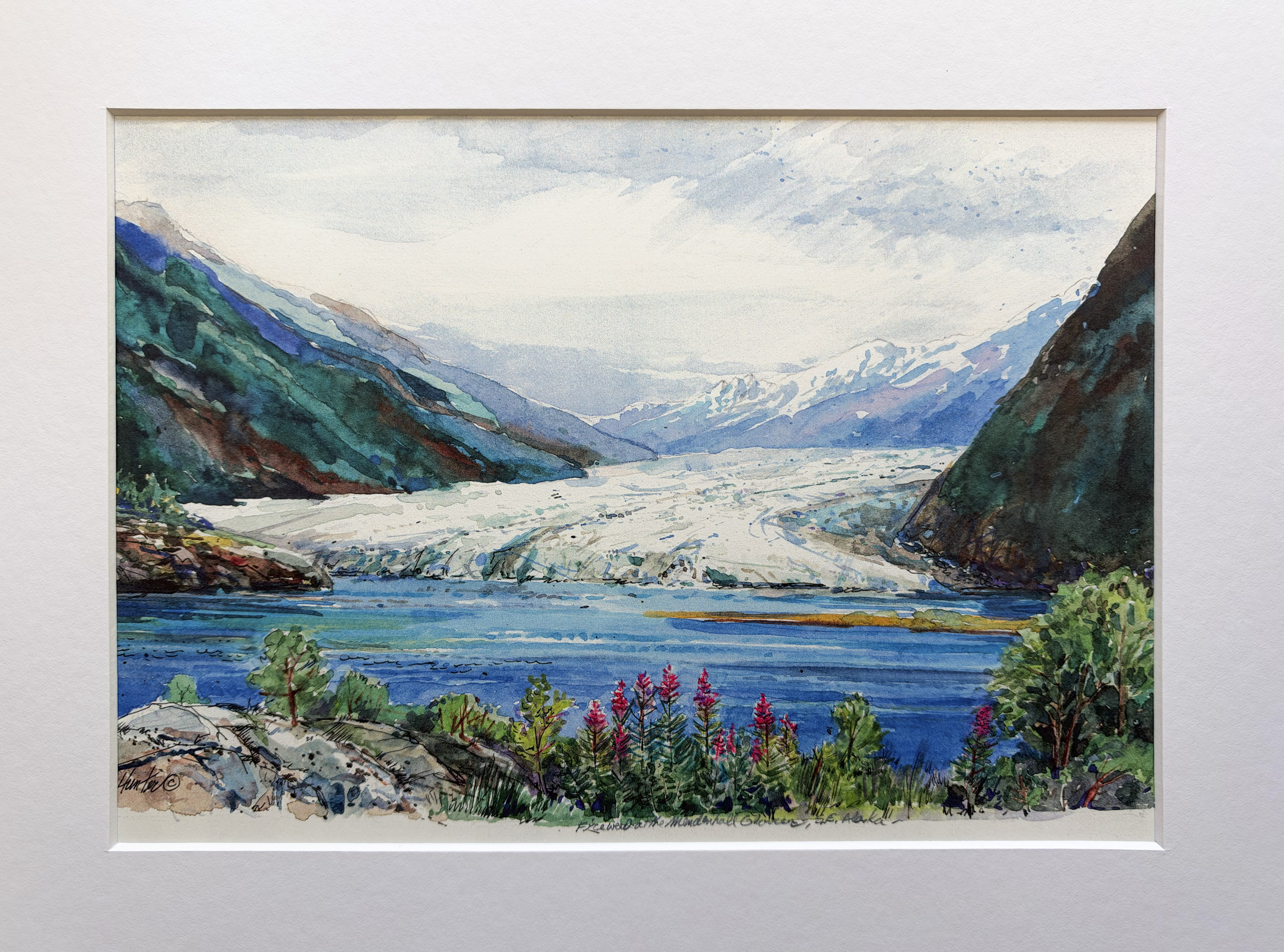
The print with mountains, Mendenhall Glacier and Fire Weed.


Quite an assortment of tough guys in search of gold.

Sketch I liked in the visitors center.

The trip from Skagway back to Whitehorse was all by tour bus. The weather cleared up and we had some beautiful scenery. This is Emerald Lake.
Favorite Bible verse of the day: Revelation 4:11
“Worthy are You, our Lord and our God, to receive glory and honor and power; for You created all things, and because of Your will they existed, and were created.”

