Alaskan Adventure: Days 62-67 This is a ‘catch-up’ post that includes lots of miscellaneous pics between the big activities that have been separate posts. There is so much to see and do it is hard to keep up.
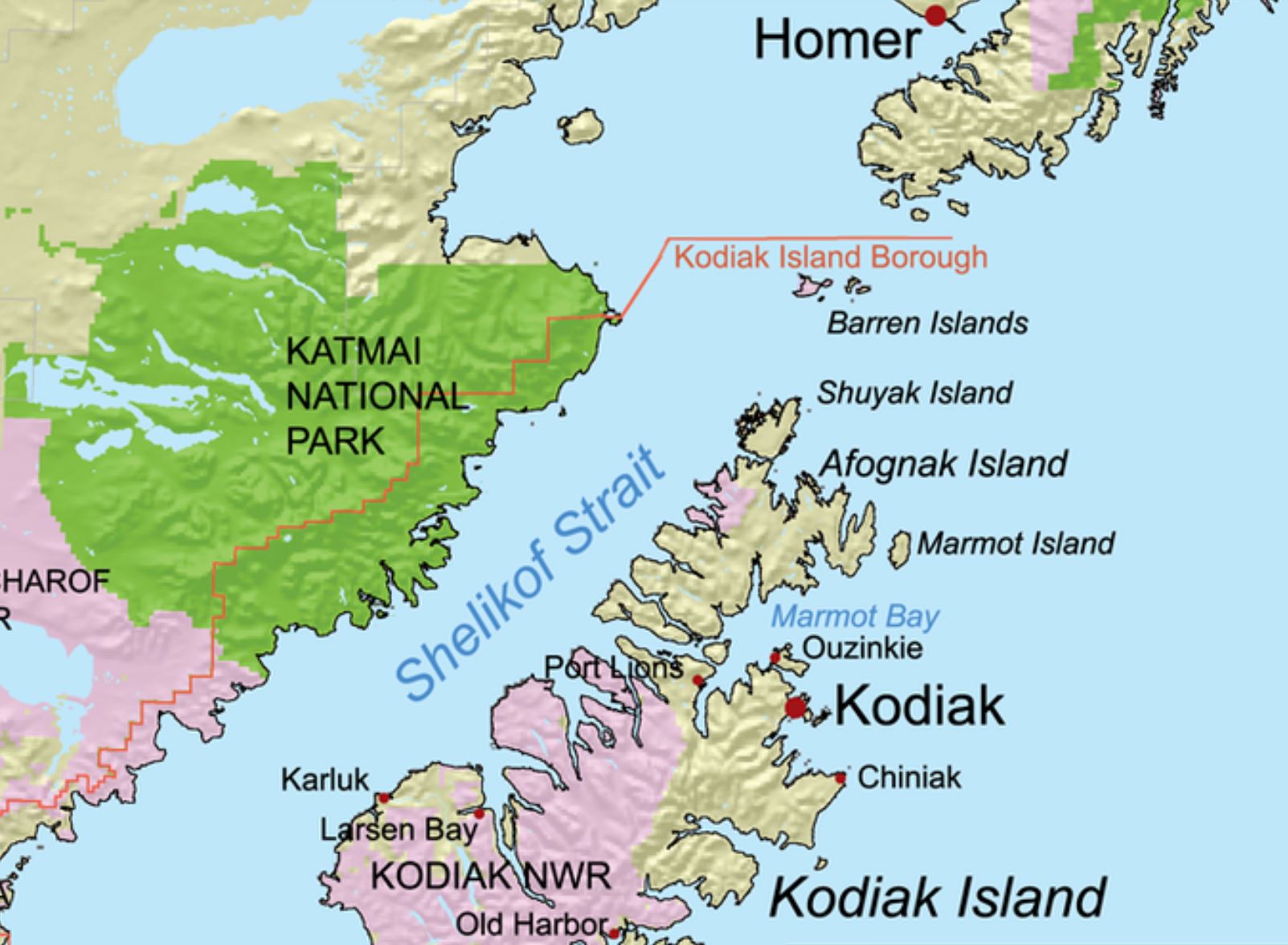
The Bear Viewing and Halibut Fishing trips in Homer are separate posts. Here are a few miscellaneous pics of Homer before we travel on to Seward. Homer is located in Kachemak Bay with the unique feature of a “spit”. The 4 1/2 mile long spit has an odd history. Seems there is disagreement about how it formed but most say it is the remnant of a 14,000 year old glacial moraine (where the glacier stopped moving forward and dumped a bunch of rock and gravel). The 1964 Good Friday Alaska earthquake dropped the spit 4′-6′. The town got it’s name from Homer Pennock in 1896. The spit was a popular hippie hangout in the 60’s which must have been exciting during the earthquake. The earthquake was the 2nd biggest quake (9.2) ever recorded on earth.


Our campsite at Homer was not down on the spit but up on a high bluff overlooking the southwest end of the Kenai Mountains Peninsula.


Price lists for shipping or purchasing fresh caught fish in Homer.
On Saturday, August 1st we traveled from Homer to Seward. It was really foggy when we left but gradually cleared up by mid-morning.

Mount Redoubt (10,200′) is a massive stratovolcano across the Cook Inlet from Anchor Point area. The cloud layer was very low on the water the day we traveled back north from Homer. Some claim the road out to the end of the Homer spit is the furthest west highway in North America. Others claim that designation is the highway near Anchor Point. We drove them both.

We stopped here near Cooper Landing at Gwin’s Lodge Roadhouse for breakfast and (the last for the day) really gooey cinnamon bun. Pat and Helen Gwin used hand peeled local spruce logs to build the log roadhouse which opened in 1952. The “Sterling Highway” we were traveling runs adjacent to the beautiful turquoise blue Kenai River. Wish I had some photos of the river but the road here is narrow and winding; there was no good place to pull off. Salmon were starting to run up the river to Kenai Lake so there were fisherman starting to crowd the bridge access areas to the river.
Here’s a link to a cool overhead photo of the river: https://alaskariveradventures.wordpress.com/wp-content/uploads/2013/02/cooper-landing-from-above.jpg

Arriving in Seward we went with Mike and Amy to see Exit Glacier. Got the Kenai Fjords National Park stamp. The road to Exit Glacier is not plowed so is only open (to cars) in summer. It is the only road into Kenai Fjords National Park.

Exit Glacier is just one of many glaciers from the huge Harding Icefield. We would see much bigger glaciers the next day on our Kenai Fjords boat trip. Kenai Fjords National Park was once entirely covered in ice. It is still half covered in ice and has several tidewater glaciers. The largest tidewater glacier in the National Park is Aialik.


After visiting Exit Glacier we went to see the Seward Marina and the Seward Mariners’ Memorial.

Line of fishing boats coming in at the end of the day. Cruise ship in the background is turning around after backing out of Seward harbor.

Sea gulls were everywhere!

When we got back to our campsite there was this Bald Eagle sitting beside a huge nest.
On Sunday, August 2nd we did a boat tour from Seward Marina with Kenai Fjords Tours. See this post: https://dadartphotography.com/2026/08/02/seward-kenai-fjords-national-park-august-2/
On Monday, August 3rd we visited the Alaska Sealife Center in Seward. Here are some pics from that visit.

Old poster was a reminder that our RV road trip to Alaska was largely enabled by military efforts following Pearl Harbor.

Alaska region geography, especially names of adjacent Oceans and Seas.

Little closer showing major mountain ranges.


More maps, just because they are interesting.

Surprising to me that 10% of earths landmass is covered with glaciers and 75% of all freshwater on earth is locked up in glaciers!

I had no idea they used their fins to wedge themselves into rock crevices.
Salmon swimming. There were several tanks where you could see the progression from little to large salmon.

Salmon stuff wraps up the visit to Alaska Sealife Center.
On Tuesday, August 4th we went Gold Panning on Kenai Lake at “Prospector John’s”. This was an added activity replacing the cancelled Jet Boat trip originally scheduled back in Talkeetna that got flooded out.
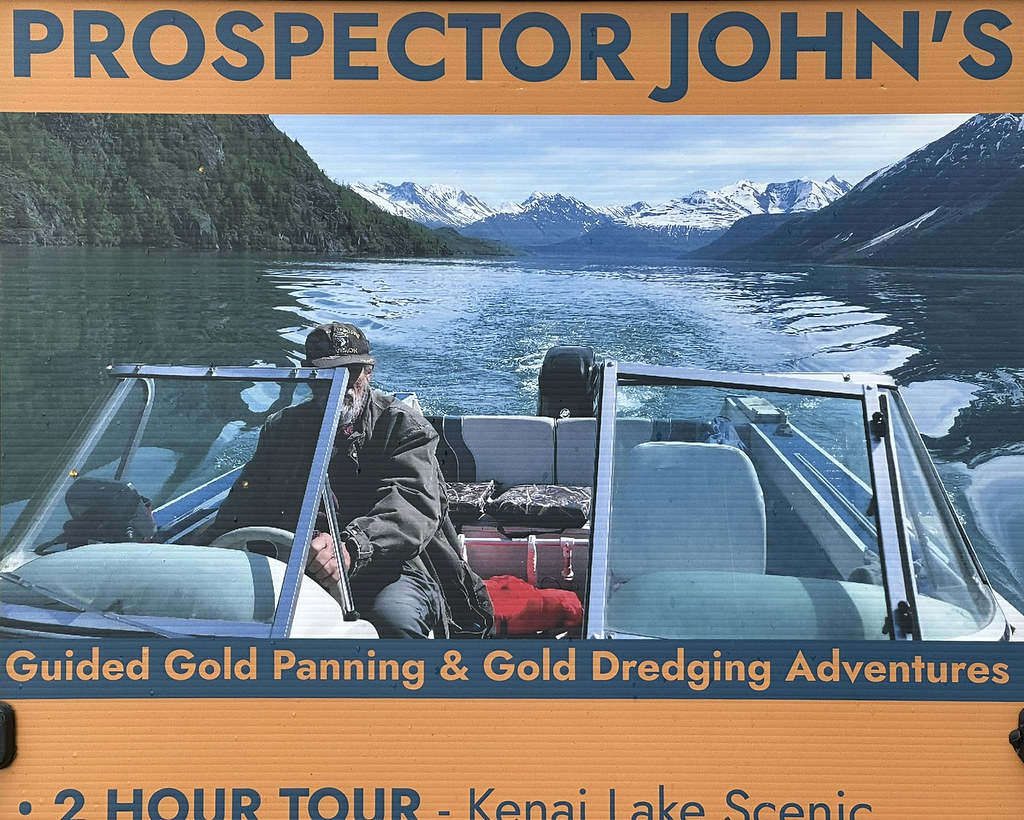

Prospector John’s headquarters is this rustic gift shop. I was greatly puzzled by the advertisement of “Jerky Jewelry”.

Beautiful blue Kenai Lake and towering mountains. There was a good deal of apprehension about this excursion but the experience was great. We had a few sprinkles but did not get poured on. The bugs were not bad, and we all found gold and some small garnets.


Curtis was our tour guide and boat pilot as we pounded across the lake. Amy and Becky smiling was a good sign.


Gold prospectors at Prospector John’s claim on Devil’s Canyon.
Becky got some personal tips and help from Prospector John himself! Prospector John was featured on Discovery Channels Gold Mining show “Devils Canyon”.

No idea what it’s worth but here’s our gold flakes and little bits of garnets
Our Wagon Master – Joe, finding gold.

On our way back to Seward we stopped at a salmon viewing area near a salmon hatchery. This was the first time we have seen salmon. Hoping to see more before the end of the trip.
On Wednesday, August 5th we left Seward and traveled to Palmer. There is only one road route so we retraced our way through the rough road in Moose Pass and headed back toward Anchorage. This was the 6th time we traveled the road along the mud flats of Turnagain Arm. Passing through Anchorage we got cheap gas at Costco ($4.47 vs $5.45 in Seward) and groceries at Walmart before continuing north to Palmer. Our group activity at Palmer was to visit a “Musk Ox Farm”.

The morning we left Seward was wet and overcast but the mountain was beautiful. The big clump in the tree is a bald eagles nest.
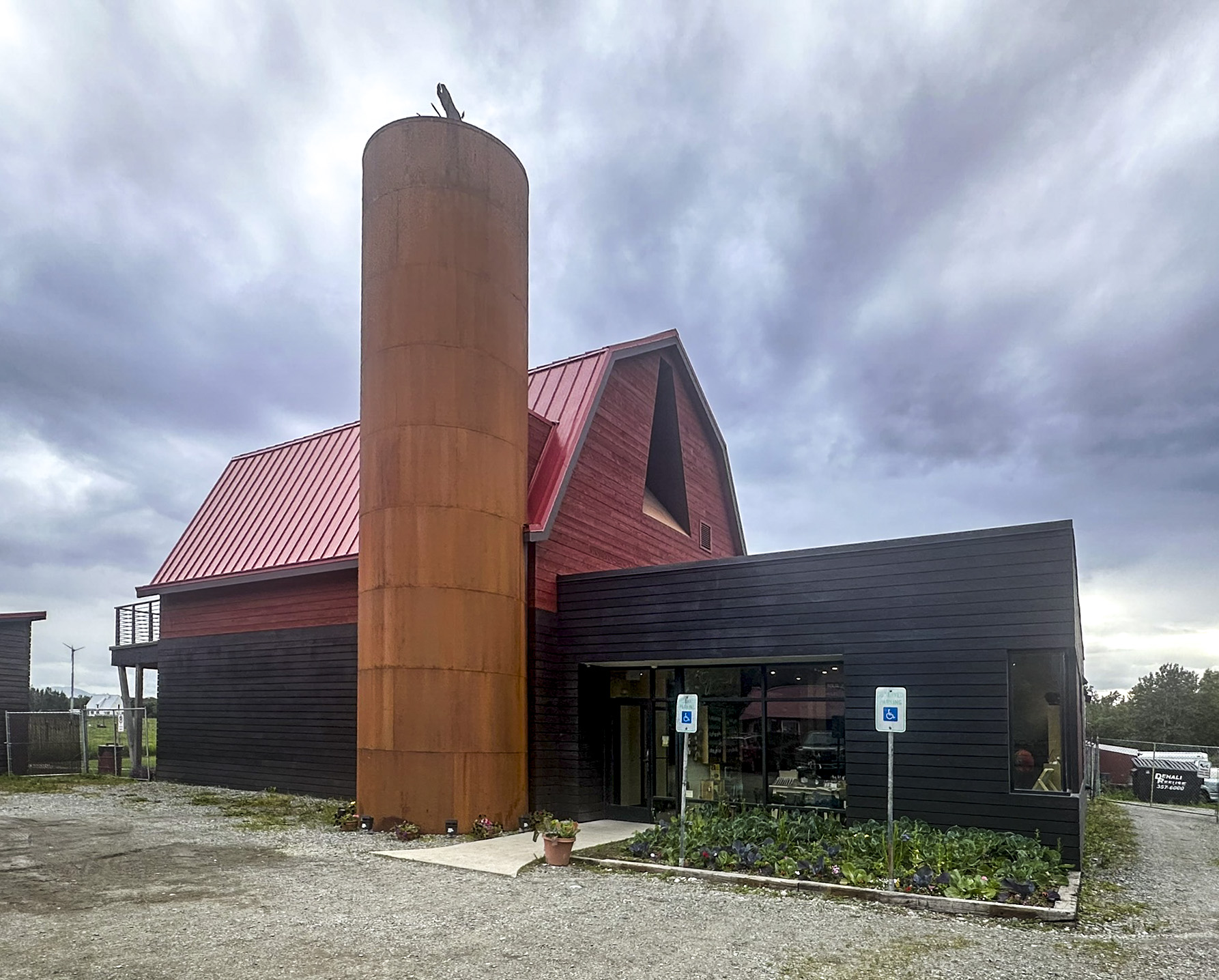
The “Barn” (Visitor Center/Gift Shop) at the Musk Ox Farm. Photo by group member Melinda.

I didn’t know that I needed to visit a Musk Ox Farm but I learned a few interesting things. Musk Ox are “farmed” not for meat but for their extremely warm under-fur. Each spring the under-fur is harvested only once by combing. They get 5-9 pounds per animal. Musk Ox are not “domesticated” and they do not like to be touched. They are prey animals whose only defense is grunting and head butting. They were eradicated from North America. These are descendants of some Musk Ox reintroduced from Iceland.
The under-fir is called qiviut (pronounced kiv-ee-yute). It is a very rare, ultra-soft, and lightweight wool that is roughly eight times warmer than sheep’s wool and finer than cashmere. A small skein of yarn in the gift shop was $150.

Part of our group getting the story and trying not to scare the big fluffy cow.


Big Black Raven visited on our walk around the farm. Posed with snow capped mountains.


We all got to hold a very heavy Musk Ox skull.

Benedict with the wary eye. They remove the sharp horn ends so they don’t injure each other.


Beautiful example of God’s creative design enabling these unique animals to thrive in extreme cold.

Awesome steel sculpture.
That’s it for miscellaneous pics on days from Homer to Palmer. Next stop is Glennallen for one night then on to Valdez for three nights.
Favorite Bible verse lately: Romans 4:21-25
…and being fully assured that what God had promised, He was able also to perform. Therefore it was also credited to him as righteousness. Now not for his sake only was it written that it was credited to him, but for our sake also, to whom it will be credited, to us who believe in Him who raised Jesus our Lord from the dead, He who was delivered over because of our wrongdoings, and was raised because of our justification.