19 of 22 – 2024 Fall Trip West Series. 10/9-14/24 Wednesday through Monday. We signed up to attend this event over a year in advance with Adventure Caravans. We chose the 6 day slot that included the “Special Shapes” hot air balloons. We had a wonderful time and would recommend it to anyone interested.
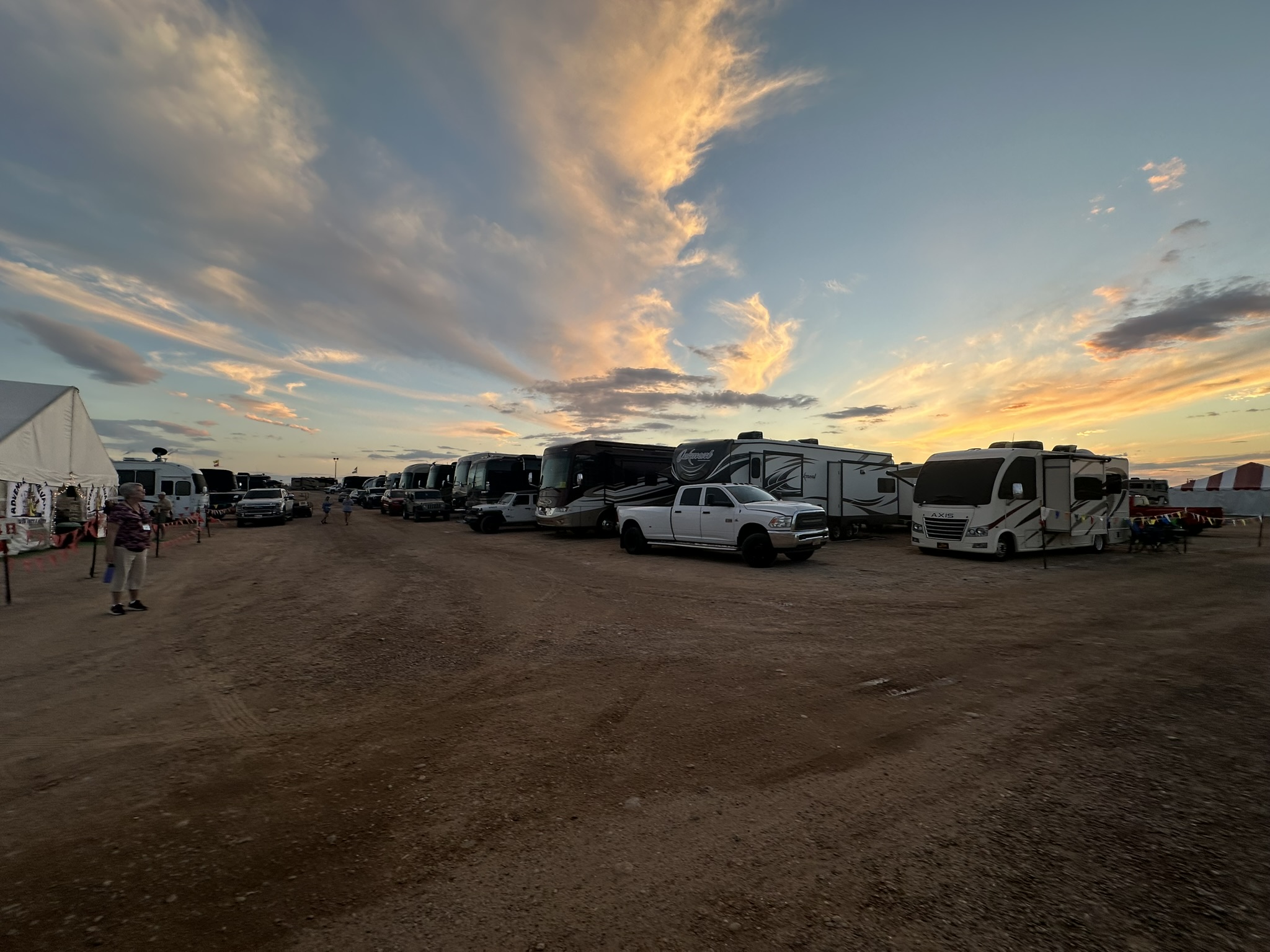
Sunset the first night. Our RV on the right. The Adventure Caravan hospitality tent on the left (with Becky standing out front). Behind me about 1/2 mile from this photo is the launch field where balloons would rise and most often drift directly over us. Just to the right of this photo is a big patch of scrubby desert where some of the balloons would land.
Morning mass ascension with Balloons floating right over our RV. We were very fortunate that the weather was beautiful all 6 days we were there. The balloons were able to fly every day which is often not the case.
A few landed right in with the campers.
Many of the balloons are just enormously huge!
Colorful shapes balloons floating right over the top of us.
From our RV looking toward the launch field. The building at the bottom that the balloons are coming up from behind is the Balloon Museum.
Frankenstein landing in the field right in front of us.
Take the shuttle bus to the launch field in the morning to walk among all the balloons. This photo has balloons on the ground being prepped to inflate, inflated waiting to launch, and just launching.
The officials are called “Zebras” wearing black and white stripes. They control the balloon traffic.
My favorite pic. Balloons rubbing together as they await the signal to ascend.
It’s hard to describe how wild, crazy, beautiful this is in person. Doesn’t look like much on a photo but in person we just marveled that so many huge, almost uncontrollable, bunched together balloons, people, vehicles, and propane burners can all do this at once.
Inflating “When Pigs Fly”
Rainbow Ryders is a popular vendor for rides if you want to go up but you should schedule beforehand. Some people in our Adventure Caravan Rally group went up. Some had a great time and an easy landing. Some had a great time and a difficult landing. We saw lots of landings where the baskets got dragged through desert dirt and thorny bushes for quite a distance. The Rainbow Ryders have huge baskets. They were affectionately called “cattle cars”.
Here’s a “landing” in the field right by our RV. I did not think my bad back was ready to handle that. I wish this was a video instead of a photo so you could see the basket bouncing across the ground being dragged by the balloon.
The “Dawn Patrol” balloons would go up before sunup to report what winds at different elevations were doing in preparation for the “Mass Ascensions”.
Early Morning Mass Ascension as sun comes up over Albuquerque.
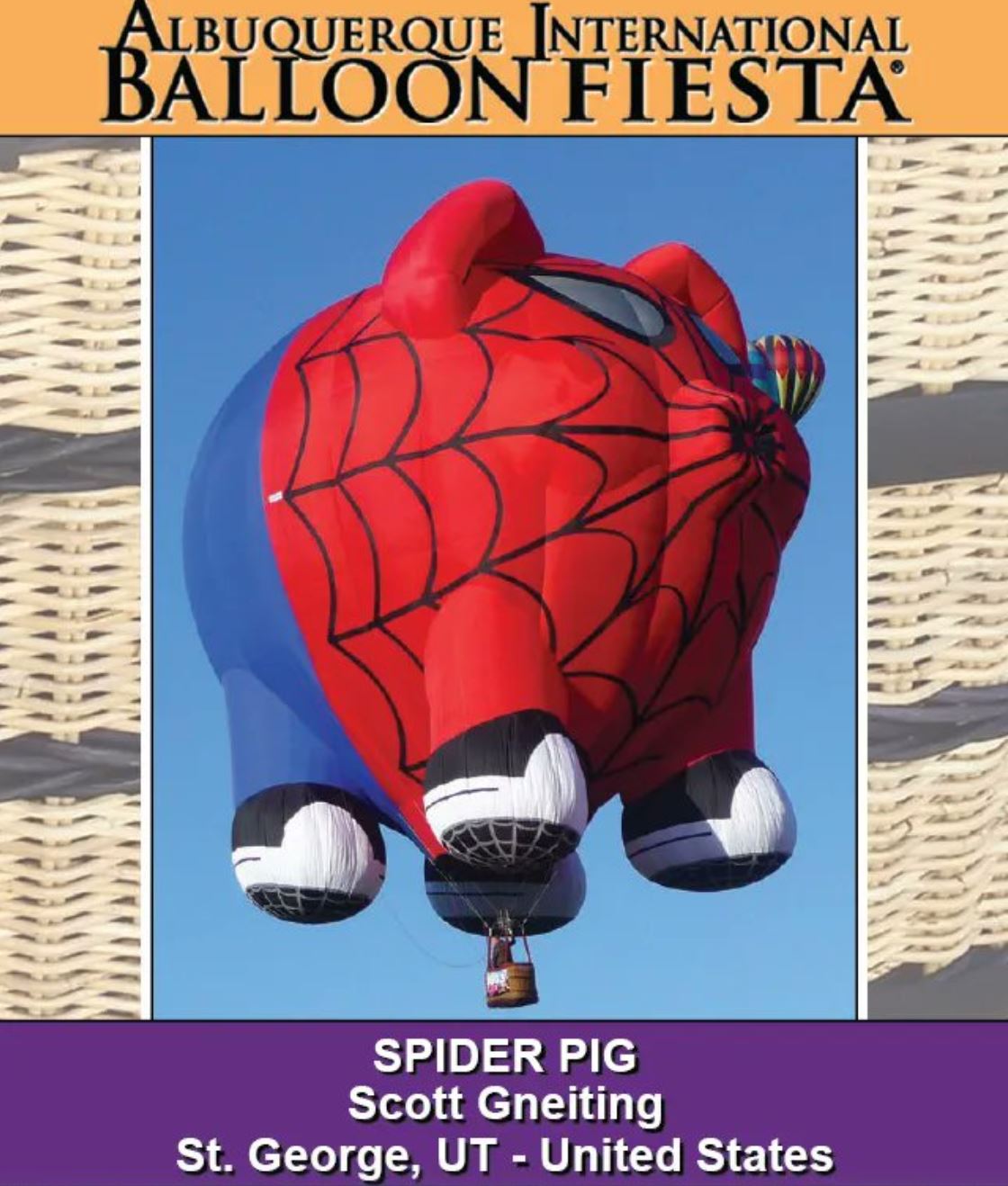
“Spider Pig”. Many of the balloons and pilots had “balloon cards” they handed out to visitors or people helping in the launch field.
“Tall Steve” the Flying Penguin floats over the Adventure Caravan tent.
The colorful “ALBUQUERQUE” balloon floated right over the top of us.
Three desert southwest patterned Rainbow Ryder balloons together.
Coming in for a landing.
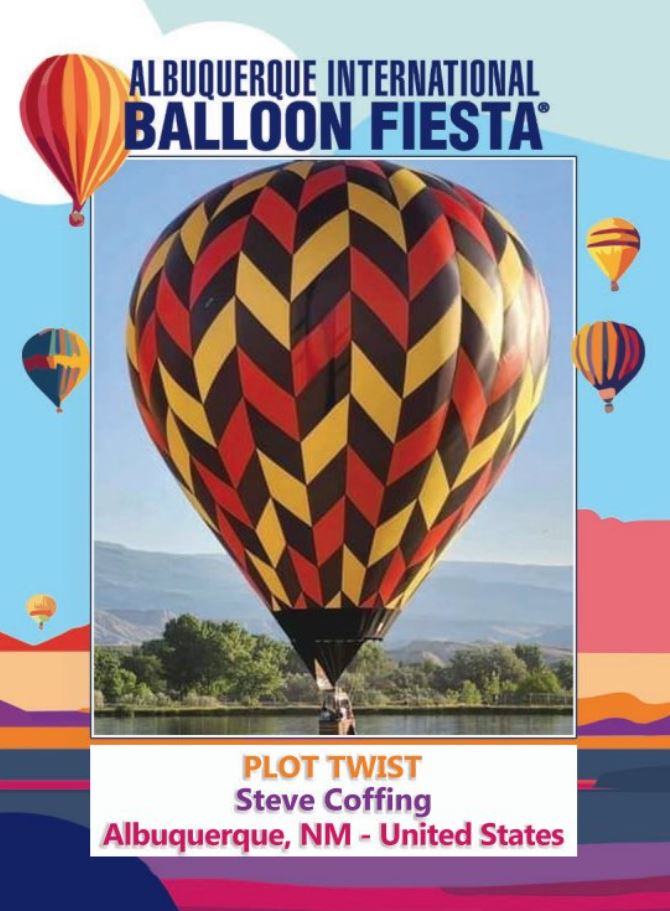
This colorful balloon named “Plot Twist” came down and landed right in front of the Adventure Caravans tent. The pilot (Steve Coffing) was friends with someone in the group. We got them some coffee and donuts then they lifted back off. On the first day of our rally Steve and crew gave us a presentation on how the balloons work which was really interesting and helpful.
See that radio antenna tower? We didn’t see it go down but a balloon tangled with the guy wires and the tower crashed down one morning. The balloon landed safely, no one was hurt. This was not the first time… 20 years earlier in 2004 a “smoky bear” shaped balloon got stuck on the same tower and could not get loose. The passengers had to climb out of the basket and down the tower to safety.
1 of 12 – 2024 Fall Trip West Series. We traveled west to Utah and back; about 6,000 miles over 49 days from Sept 10 to October 30, 2024.
Here is a List of some interesting places we stopped at on this trip (bold/italic stops are where we got National Park Service Stamps), tan ALL CAPS hyperlinks to pages:
1– HOME TO CLAY CENTER, KS Lincoln Home: National Historic Site, Springfield IL Hamilton, MO (quilt shops) International Quilt Museum, Lincoln NE (at Univ. of Nebraska) Homestead National Historic Park, Beatrice NE Pony Express Barn & Museum, Marysville KS 2– KANSAS Nicodemus National Historic Site, Nicodemus KS Little Jerusalem Badlands State Park, Oakley KS Monument Rocks National Historic Landmark, Oakley KS 3– COLORADO SPRINGS Garden of the Gods, Colorado Springs CO Pikes Peak Cog Rail, Colorado Springs CO Florissant Fossil Beds National Monument, Florissant CO 4– Colorado National Monument, CO 5– Arches National Park, Moab UT 6- Canyonlands National Park, (Needles) Moab UT Needles Overlook, Newspaper Rock, & Wilsons Arch 7- Canyonlands National Park, (Island in the Sky) Moab UT Dead Horse Point State Park Bears Ears National Monument? John Wesley Powell River History Museum Capital Reef National Park, Torrey UT Grand Staircase-Escalante National Monument, UT Bryce Canyon National Park, UT Cedar Breaks National Monument, UT Valley of Fire State Park, Moapa Valley, NV Hoover Dam National Historic Landmark Pipe Spring National Monument, Kaibab AZ Grand Canyon National Park (North Rim) Zion National Park, Springdale UT Glen Canyon Dam & National Recreation Area, Page AZ Horseshoe Bend, Page AZ Sunset Crater Volcano National Monument Walnut Canyon National Monument, Flagstaff AZ Petrified Forest National Park Albuquerque Balloon Fiesta, Albuquerque NM (Adventure Caravans 6 day RV rally) Valles Caldera National Preserve, Jemez Springs NM Manhattan Project National Historical Park, Los Alamos, NM Pecos National Historical Park, Pecos NM Tucumcari Route 66, Tucumcari NM Cadillac Ranch, Amarillo TX Fort Smith National Historic Site, Fort Smith, AR Crater of Diamonds State Park, Murfreesboro, AR
Here is a map of our route for this trip. The red spots are where we camped overnight, all the grey spots are places we visited.
We needed to do some “RV Prep” a few weeks before starting this trip when we discovered the front window was leaking at the top edge around the seal. Also added some back tail lights to be more visible.
If you want to skip the “RV Prep” section, jumping right to the Trip, click here: –>#Trip
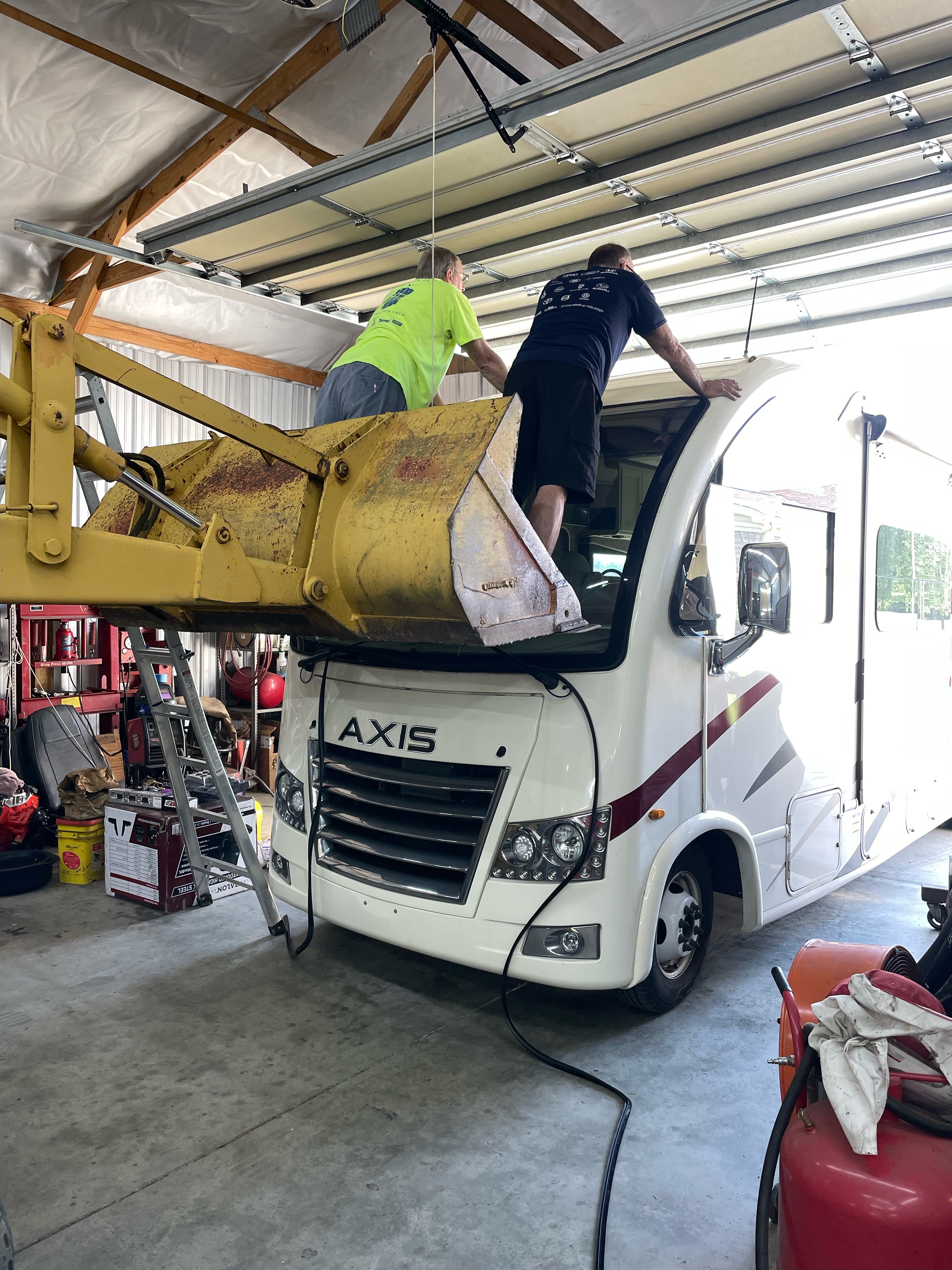
The gasketing was never seated flush around the corners of the windshield and there was a gap in the gasketing at the middle top of the windshield (which should have been at the bottom…) Nathan took this pic of me and Damon standing in the loader bucket after pulling the gasketing out from around the windshield. We intended to reinstall the gasketing with the joint at the bottom but found it was too ‘formed’ to fit differently so we put some windshield gasket sealant in and reinstalled the gasket. There were some places where the gasket still didn’t seat flush so then we went to ‘Plan B’.
Plan ‘B’ was to rent scaffolding from Menards, mask around the upper windshield and install sealant to close the gaps. As it turned out we had almost no rain for the entire trip but since being back we have had plenty of rain, snow, and ice with no leaks.
We (the “royal we”, mostly our awesome mechanic friend Damon) installed vertical lights to make the RV more visible in hazy or foggy conditions. People who had followed us on trips had told us that the tail lights were not very bright in those conditions. The vertical lights also help others notice our blinkers during lane changes. At night backing into a campsite they really light things up.
Starting the Trip: with the RV ready to go we headed West early in the morning of September 10th. Our first stop for a National Park Service Stamp was Abraham Lincoln’s Home in Springfield, Illinois.
Lincoln’s Home: 426 S 7th Street, Springfield, IL. The home of Abraham Lincoln for 17 years (1844-1861) until he left for Washington, DC. in 1861 to serve as our 16th President. The home and surrounding 4 block area are restored and free to visit. We didn’t stay long; we read some history at the Visitors Center and wandered around a bit before heading on West.
Above: Two other interesting old homes in the historical area.
Hamilton, Missouri “Quilt Town, USA” is a fun place to stop along US 36. It was a beautiful day and a nice hour long break from driving. Becky bought a pattern and fabrics for making little “Sea Turtle Pincushions”. Interesting trivia: Hamilton, MO is the boyhood home of J.C. Penny.
After the Hamilton stop we drove on to Lincoln, Nebraska where we stayed overnight at “Camp a Way”. In the morning we packed up and went to Nebraska University to visit the International Quilt Museum; also known as the “Quilt House”.
Becky, about to enter the International Quilt Museum.
I thought this quilt museum stop would be great for Becky and boring for me. It turned out great for both of us. The quilts were amazing and the architecture to display the quilts was also amazing. The brick and stonework were quilt block patterned. Even the bathroom wall tiles had ‘quilt’ patterns.
Looking down on the entry and gift shop.
Transparent pattern quilts and a ‘quiltish’ Abraham Lincoln poster linked together our visits to Lincoln’s Springfield, IL home yesterday, and Lincoln’s role in the Homestead Act which we would go to visit next.
The main exhibition of red quilt art was by Victoria Findlay Wolfe called “Option Expedition”
We really enjoyed the astonishing galleries of quilts. Becky purchased a colorful purse with a quilt triangle pattern. We stopped at a Costco in Lincoln to purchase a new iPad for Becky. Her old one still worked but had a broken screen and was forgotten at home. We left Lincoln, NE and headed for Beatrice, NE and the Homestead National Historical Park.
This beautiful landscape painting is at the Homestead National Historical Park: Education Center. The rest of the photos to follow are from the Heritage Center. It’s worth visiting the Education Center just to enjoy this huge full height wall size painting. This picture doesn’t do it justice.
View of exhibits and out the windows of the Heritage Center. The National Historical Park is in this spot outside what is now Beatrice, Nebraska because this land was the first registered Homestead by Daniel Freeman (midnight, January 1, 1863).
The role of Abraham Lincoln shows up again.
I thought that most Homesteaders were successful. Surprised to learn how few Homesteaders got to keep the land.
The last Homestead patent was issued in 1988. I was 33yrs old and had no idea that it was still possible to apply for a Homestead Patent.
Political party ‘spin marketing’ was a thing back then too.
“Experts” making confident claims hasn’t changed at all. Reminds me of all the current climate change prophecy being trotted out.
Pony Express Barn and Museum in Marysville, KS. Pretty much a volunteer operation. We found someone who told us it was closed because the volunteers were ill. This original stone barn was built in 1859. In 1860 it was leased to Russell, Majors, & Waddell to use as a livery stable for the Pony Express.
One last photo of the Koester House in Marysville, KS. We didn’t visit because we needed to hurry on to Clay Center, KS to get set up for a few days camping at Doug & Dee Kamphaus home as we prepared for the big trip west.
As anticipated, the 2023 Jekyll Island Axis/Vegas Meetup was the high point of our trip. We had a great time reacquainting with the folks we met last year and meeting lots of new Axis/Vegas folks this year.
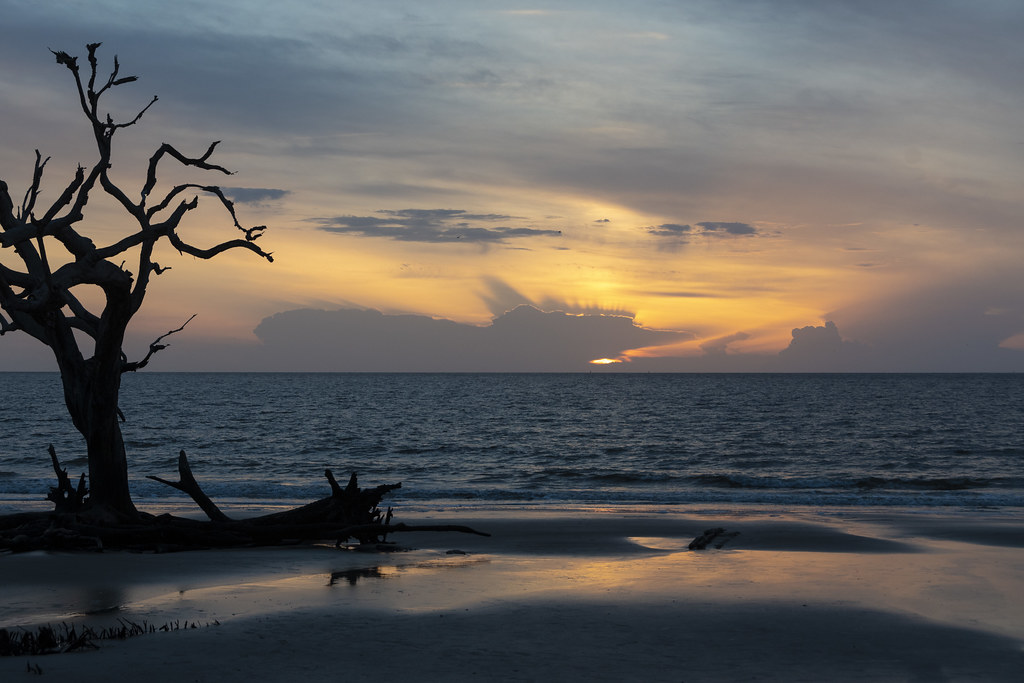
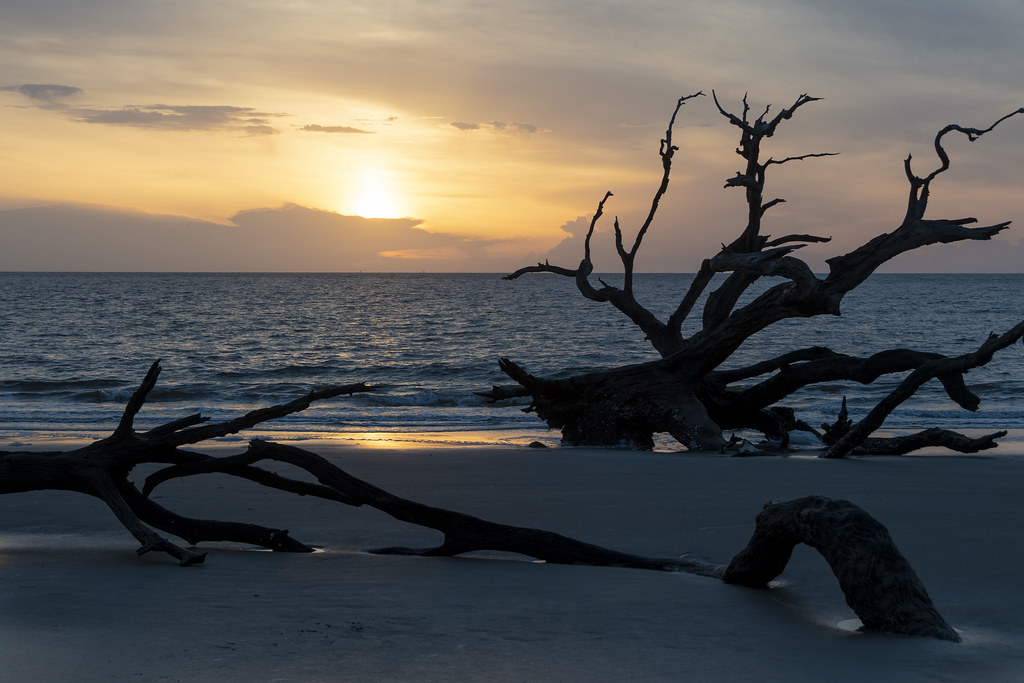
Driftwood Beach Sunrise; Jekyll Island State Park. This beautiful, unique beach is within walking distance of the State Park Campground.
An iPhone selfie ‘we were there’ pic. Scruffy, didn’t shave, it was my Birthday. Becky got up early with me to see the sunrise.
Above: Looking left and looking right on the beach. There is a lot of “driftwood”. This beach is at the north end of Jekyll Island (which is also where the campground is). The north end of the island is gradually being eroded away by the generally southerly ocean current along the coast. The south end of the island is growing. This used to be a forested area. Storms, erosion, and tides kill the trees along the shrinking edge which creates the wild landscape.
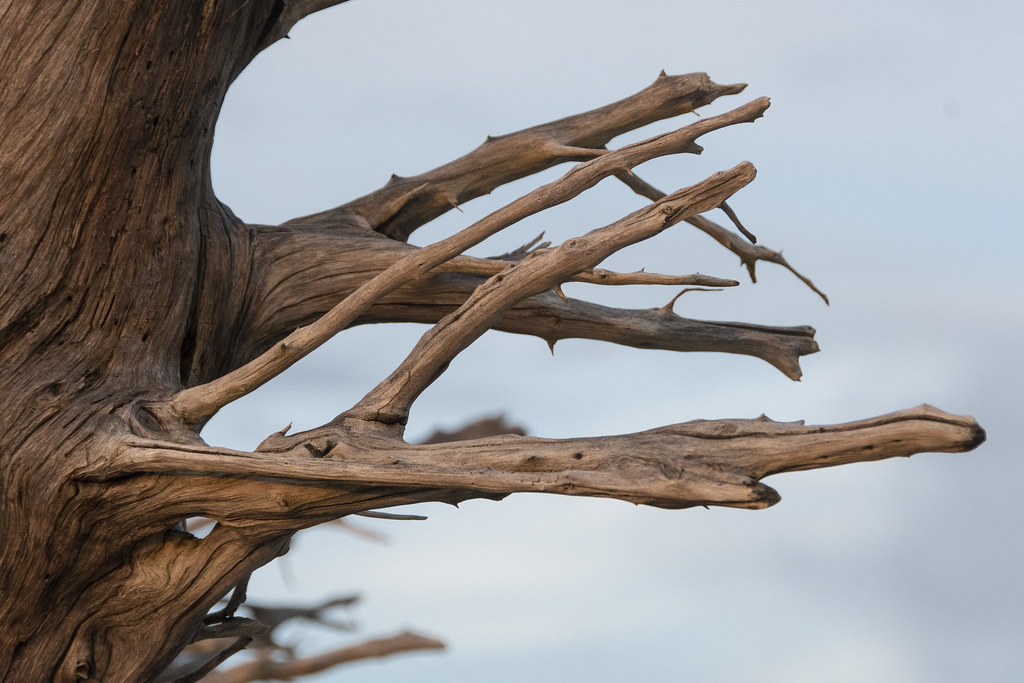
While not officially ‘wood that has drifted’, it looks very much like classic weathered driftwood.
It’s hard to tell but there are about 20 Axis/Vegas RV’s very similar to ours in this photo. Other adjacent streets had similar line-ups of Axis/Vegas RV’s for about 48 total. We see these very rarely when traveling so it is reassuring to have confirmation there are others “out there”. Anson Adams, a representative of Thor Motor Coach, also attended the meetup. He said this was the first time Thor had sent a representative to a meetup that was not for the larger more expensive diesel motor coaches (all Axis/Vegas have Ford gasoline engines and Ford E350 or E450 chassis). Anson also noted that this Ford engine/chassis design is primarily aimed at the UPS/FEDEX delivery van/box truck market.
That’s our RV behind the “Red Bug Motors” golf cart. We rented the golf cart to get around the island while Becky recovers from knee replacement.
Another cool thing at this meetup was when everyone with a e-bike brought them together to share and answer questions.
We enjoyed learning from each other. On left is TJ showing off his handcrafted “pullout pantry drawer with LED lighting”. He (and lots of others) have made wonderful modifications to their rigs. We also had great food and treats at “pizza night” and at a pitch-in supper (including these delicious RV sugar cookies from Geri).
The Jekyll Island logo is everywhere
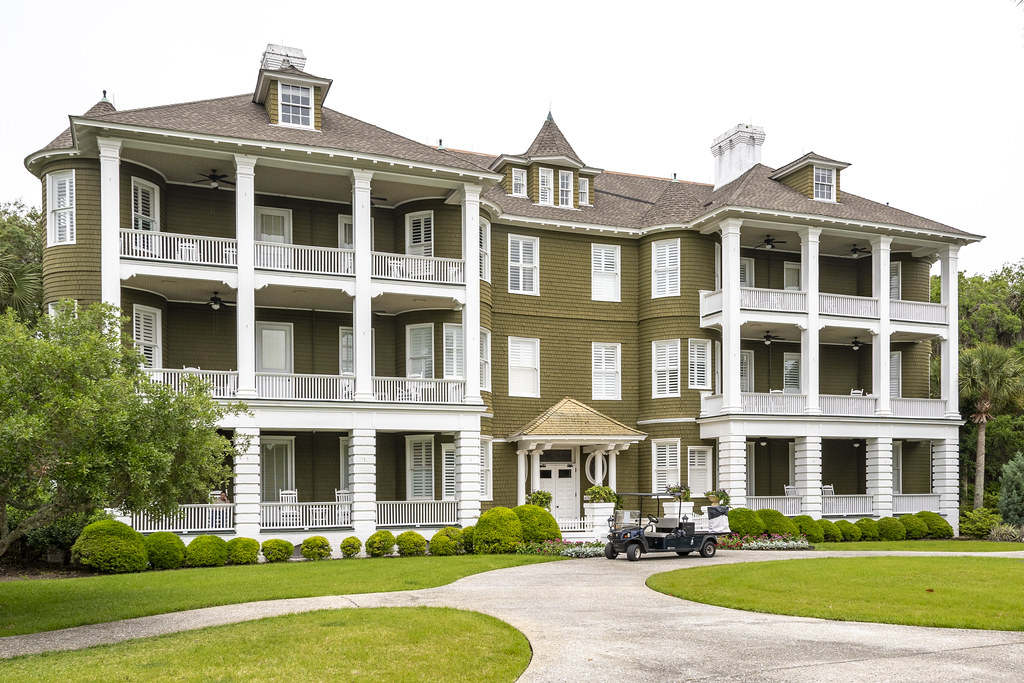
We went on a group trolley tour of the historic area. The tour is primarily the Club House and “Cottages” where millionaires like Morgan’s, Rockefeller’s, and Vanderbilt’s vacationed during January, February, and March each year to escape the northern cold climate.
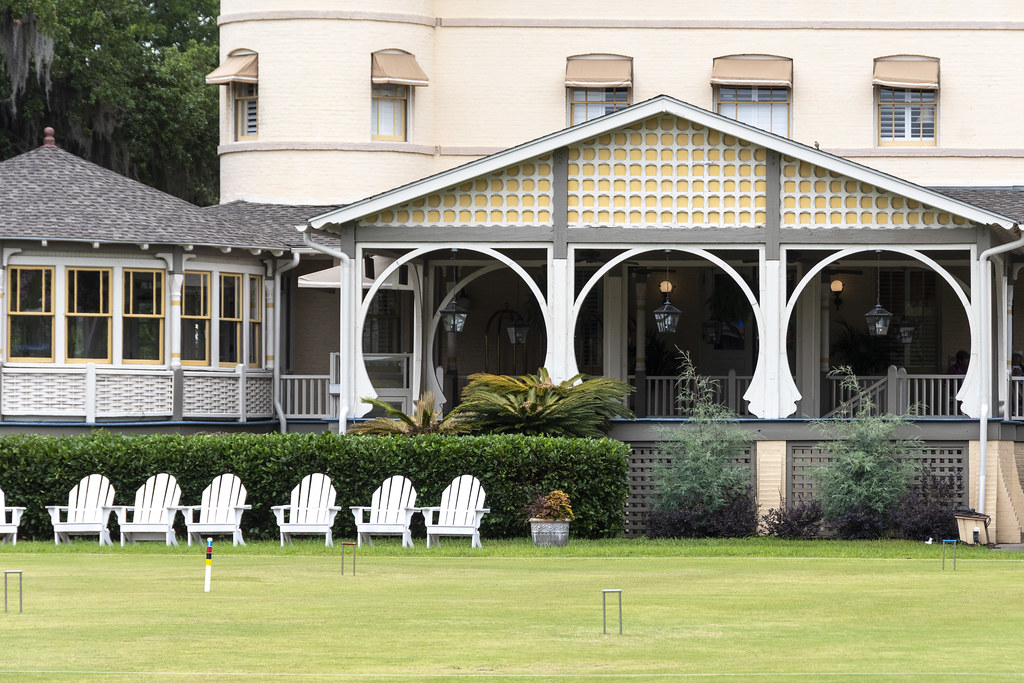
Entrance to the Jekyll Island Club House (the Millionaires Club). Care for a leisurely game of croquet?
The Club House. Original building on the left, later expansions on the right
The first visit was to Moss Cottage. The cottage was built for William Struthers Jr. and had the date of completion crafted into one of the attic dormers in sea shells. Struthers was the first club member to bring a “gasoline automobile” to the island. It was not well received and he had to send it back to Philadelphia. The cottage was built of all local materials, including cypress shingles and was named because of the profusion of Spanish moss hanging from the surrounding trees. Struthers was the retired owner of the Philadelphia John Struthers and Son Marble Works Company. The cottage was later owned by George Henry Macy, tobacconist of Hudson, New York, who became president of Union Pacific Tea (later the chain of A&P grocery stores 1859-2015).
Our tour group for the 1 1/2hr tour.
One of the front rooms of the “simple” cottage
In keeping with the “simple” lifestyle at Jekyll, custom plates were on display in the kitchen. Most meals were eaten at the Club House. When the owners of the cottages wanted a meal at home they did not prepare it. It was prepared at the Club House and catered to be rewarmed, plated, and served at the cottage. From Moss Cottage, we moved on to Mistletoe Cottage.
Mistletoe Cottage: was named for the mistletoe that grows in the Spanish moss (or maybe grew, we didn’t see any). This was built for Henry Kirke Porter in 1900. Porter studied theology to become a pastor until his father gave him $20,000 to do something that would make more money. He started a small machine shop with a partner called Smith & Porter Machine Works in Pittsburg. This grew into a very profitable company; H.K. Porter, Inc.
The Photoshop “stitching” of several photos didn’t work very well on this image; if you look too closely you’ll find wonky stuff, but, it’s the best shot I have of the Front Room where visitors were often entertained at this cottage. The three front doors open out onto a big patio.
The back porch at mistletoe cottage, a simple affair…
The metal protective light globe and the (reproduction) stenciled ceiling. The entry door was placed on the side of the house so that horses and carriages would not park in front where those being entertained had room to spread out with the beautiful views looking west toward the sunset over the river and marshes.
This was the possibly the first “condominium” in North America.
This large watercolor painting is on the wall of the Mosaic Museum, just outside the restrooms. I think it says “Jeckyl 1925” I didn’t see any information on the painting or painter. Hope it’s ok I took a pic.
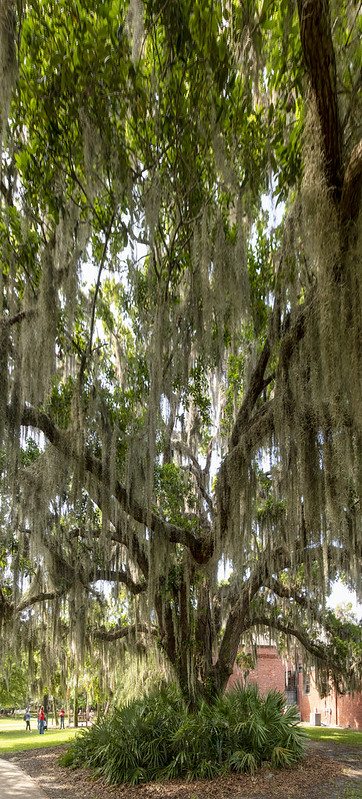
We visited The Georgia Sea Turtle Center. Everyone is talking these days about the “terrible” Sargasso seaweed washing ashore on the Florida beaches. I thought it was a bad thing but learned the baby turtles swim straight for the Sargasso Sea seaweed patch in the middle of the Atlantic Ocean. The females live and grow in the protection of the seaweed for over 10 years before venturing back to the same beach to lay eggs. There was an awesome moss covered Live Oak tree just outside the Sea Turtle Center. It is so awesome it seemed like a Disneyland artificial creation.
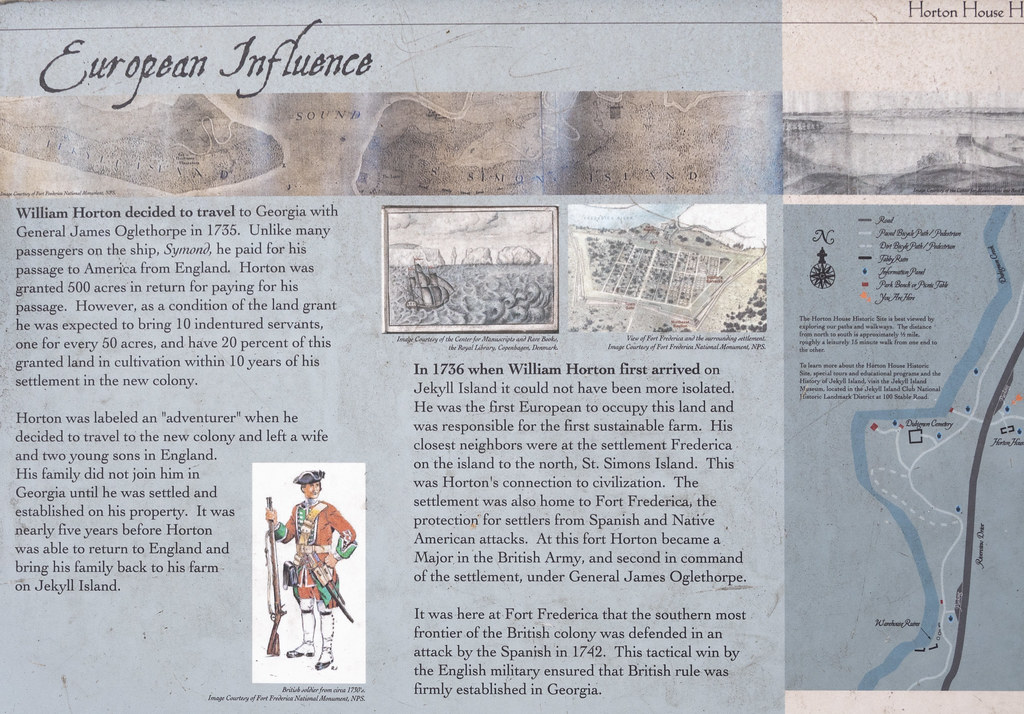
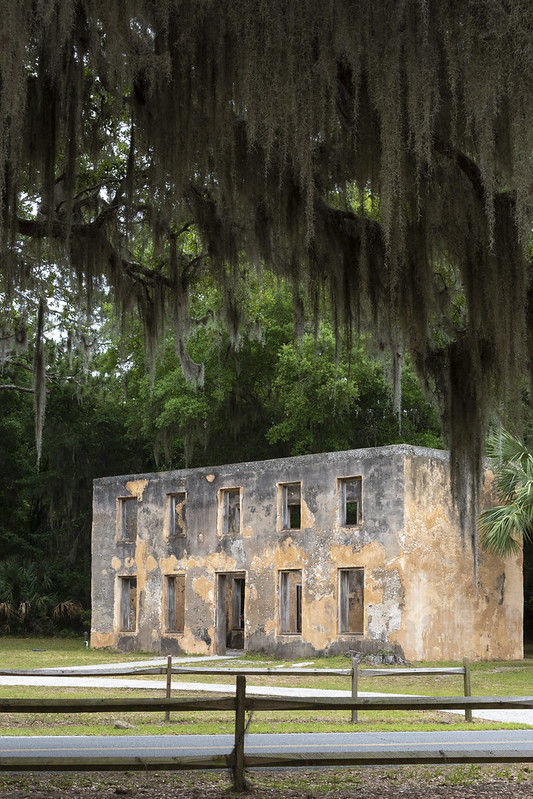
The remains of the Horton House. William Horton traveled from England to Georgia with General James Oglethorpe in 1735.
Interior of Horton House ruins and a closeup of “Tabby” construction (like concrete but using clam shells instead of gravel)
Interesting historical stuff. If interested click to enlarge and read – or skip it…
Pelicans skimming along the water at the pier.
The shoreline from the pier. That is St. Simon Island in the background.
Pelicans coming in for a landing.
Ending this post with a brilliantly colored flower we found blooming on the way to the pier.
PS. One more interesting thing we learned about Jekyll Island. A secret meeting of millionaires, bankers, and Senate Republican leader Nelson Aldrich, was held here in 1910 with a goal to improve the US banking system following the banking panic of 1907. A centralized (national) banking system, with a uniform interest rate, was determined here at Jekyll Island. This meeting was the conception of what in a few years would became the Federal Reserve System.
Interesting that today the Federal Reserve admitted the collapse of Silicon Valley Band (SVB) was (in part) a failure of oversight by the Federal Reserve System….
Our last stop on the way to Jekyll Island was awesome.
Edge of Manatee Spring.
The spring is beautiful. They have added steps and guardrails to help swimmers enter the mucky edge. The water out in the middle is crystal clear. Good swimming if you are not afraid of alligators and snakes.
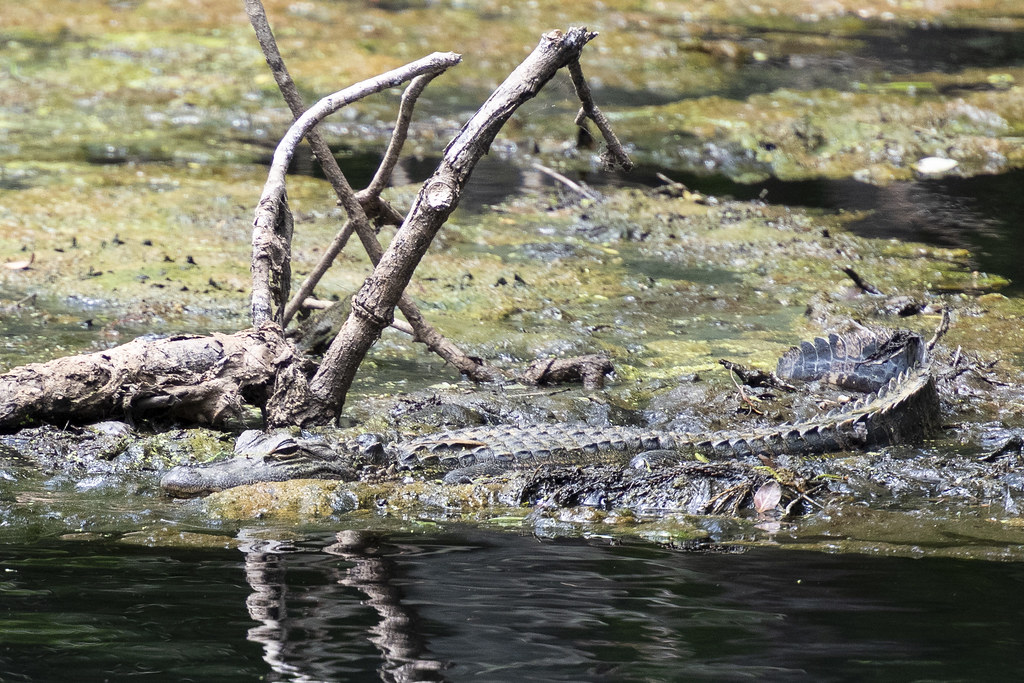
This guy and several of his siblings were sunning in the muck just downstream of the spring where a bunch of people were swimming… not me
Also just downstream from the Spring… Someone told us this was a cottonmouth?
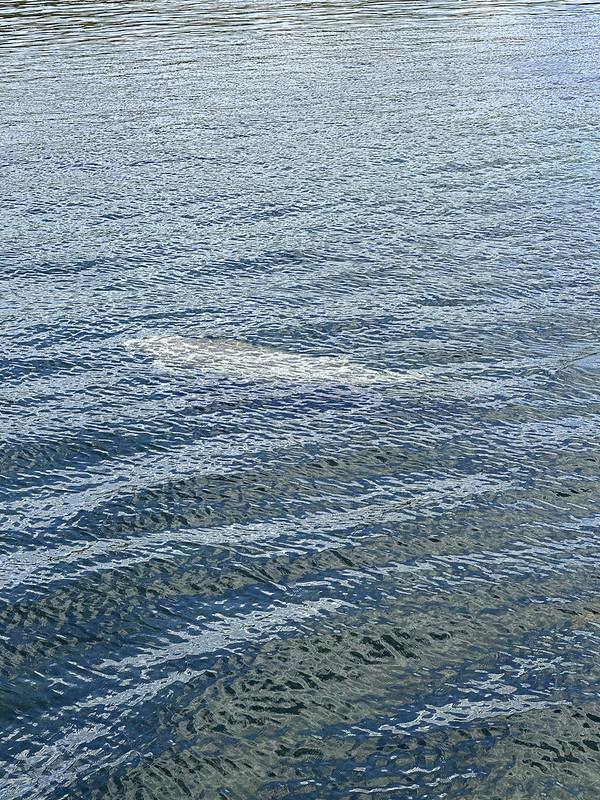
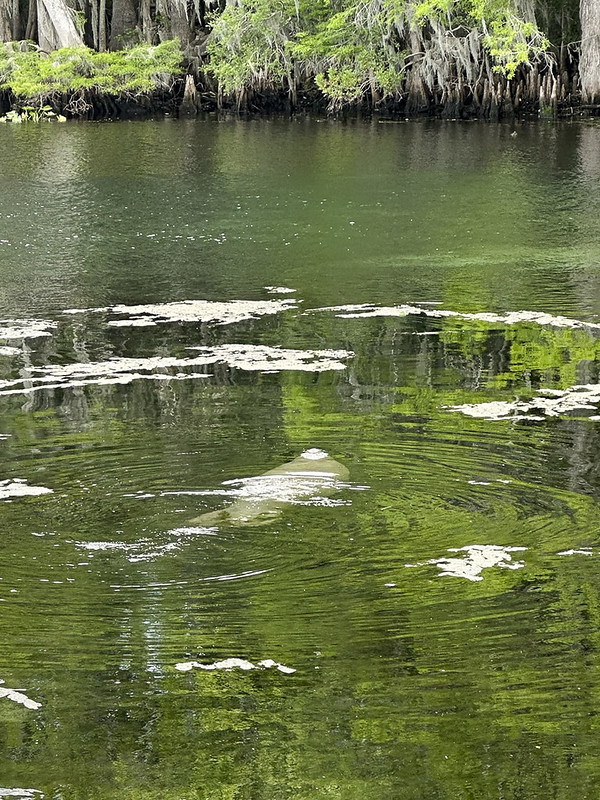
Becky searching for a Manatee.
Everyone told us April 21 would be too late to see a Manatee but we did!
The Suwanee River does not have any flood control dams on it so it floods fairly often. The post shows levels of flooding that inundate the area. The plaque is a 1774 description of the spring.
A White Ibis flew by. What an incredible beak!
Yellow Crowned Night Heron.
A sequence of Night Heron landing on sunny branch.
A different Yellow Crowned Night Heron – with a more yellow crest/crown and doing the one-legged heron thing.
Night Heron hunting crabs.
Night Heron’s love crabs and crawdads. They got one but it happened so fast I had no idea what they got until getting a look at photos.
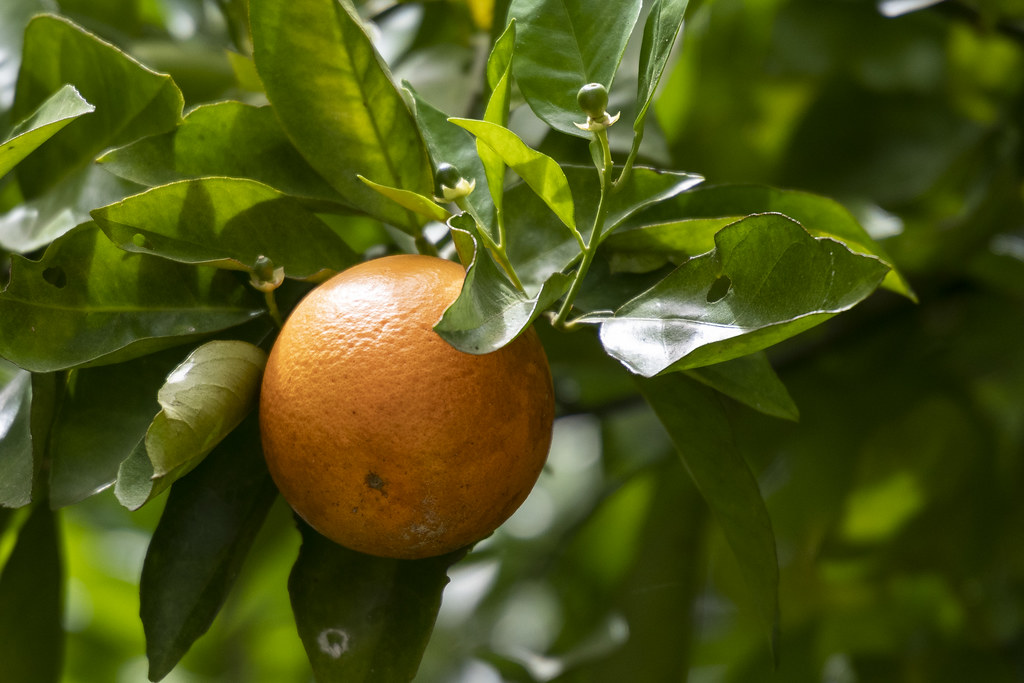
Our campsite had an Orange Tree!
And a Brown Anole threatening us with his throat thingy (Dewlap).
We hiked a Tablelands trail up into “Winter House, Brook Canyon”
Gros Morne Mountain in the background. Tablelands barren rock in the foreground. The hike begins much lower in a valley and climbs gently (but relentlessly) upwards to the Tablelands.
Another view of Gros Morne on the hike before getting up to the Tablelands level
Jennie & Roni on the trail up and one of the small streams of snow melt
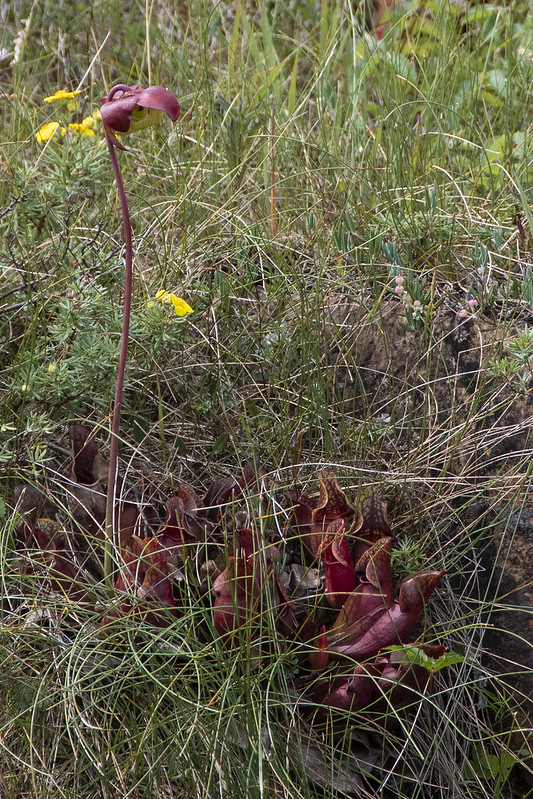
The carnivorous Pitcher Plant lives in the barren Tablelands because it gets nutrients from insects it devours instead of from the soil. The Pitcher Plant is Newfoundland and Labrador’s Provincial Flower.
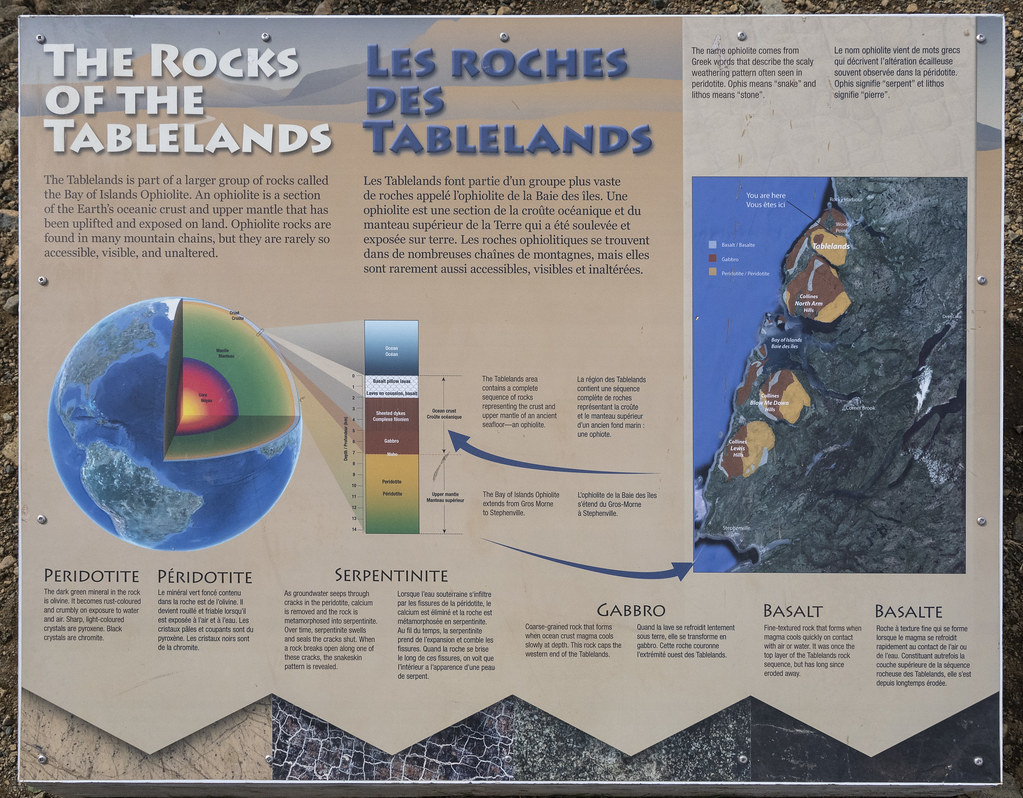
Peridotite: Green rock thrust up by continental drift from deep earth’s core
From Wikipedia:
The Tablelands, found between the towns of Trout River and Woody Point in south west of Gros Morne National Park, look more like a barren desert than traditional Newfoundland. This is due to the ultramafic rock – peridotite – which makes up the Tablelands. It is thought to originate in the Earth’s mantle and was forced up from the depths during a plate collision several hundred million years ago. Peridotite lacks some of the usual nutrients required to sustain most plant life and has a toxic quality, hence its barren appearance. Peridotite is also high in iron, which accounts for its brownish colour (rusted colour). Underneath this weathered zone, the rock is really a dark green colour.
More Peridotite:
End of the trail: Winter House Brooks Canyon. Not like most National Parks… Usually there would be a sign telling visitors not to walk on the fragile alpine terrain. Instead, because there’s nothing to hurt except yourself in this place, they have a sign saying go wherever you want, just be sure you have navigation skills to find your way back.
This photo from a different part of the park with the Tablelands in the distance. The barren landscape is a sharp contrast with the lush green of the rest of Gros Morne National Park and Newfoundland


































 DADart Photography