7 of 12 – 2024 Fall Trip West Series. Canyonlands National Park “Island in the Sky” and Dead Horse Point State Park. The “Island in the Sky” name refers to the 2,000′ high mesa the entire area is on (compared to the river valley floor below).


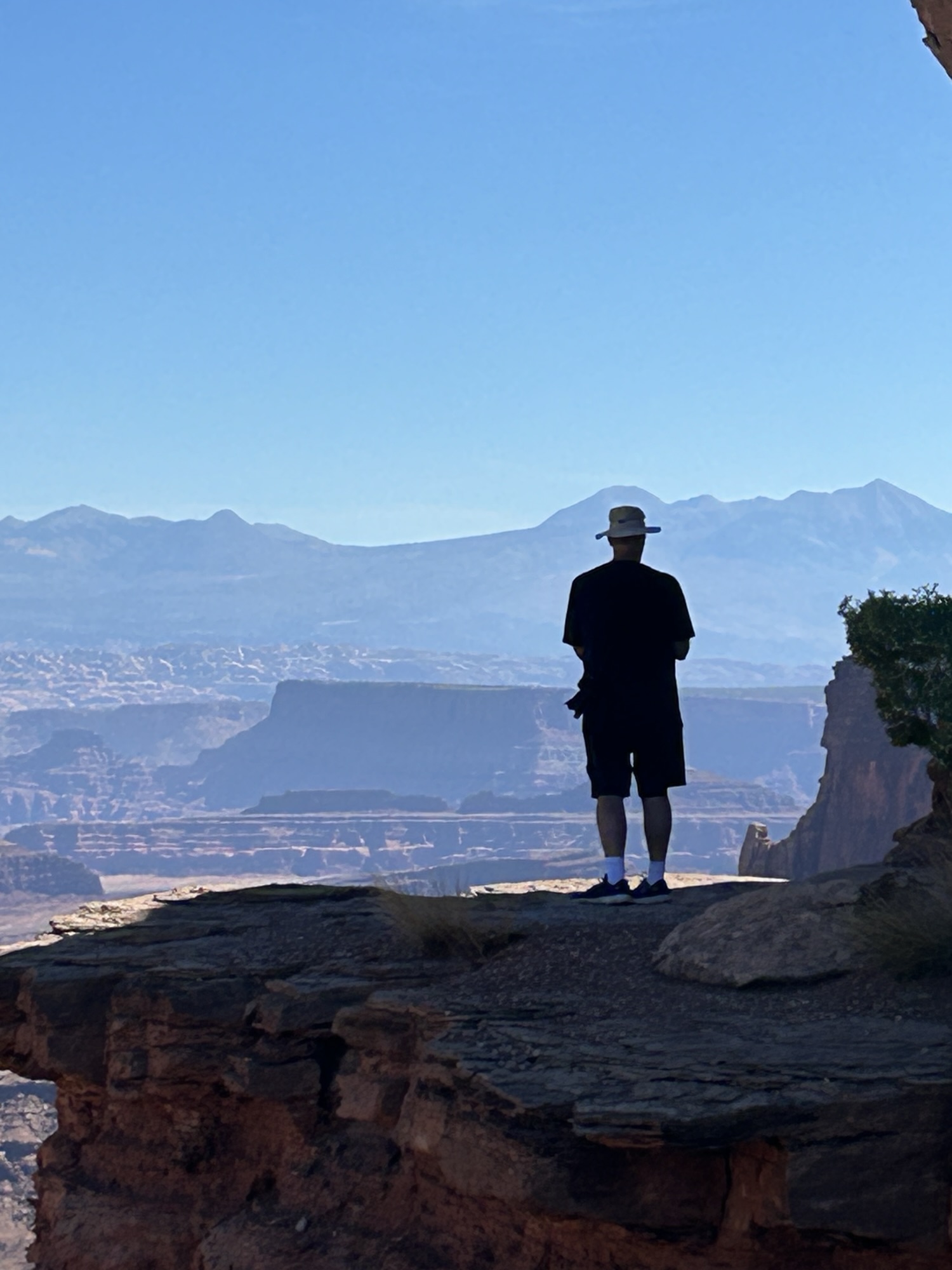


7 of 12 – 2024 Fall Trip West Series. Canyonlands National Park “Island in the Sky” and Dead Horse Point State Park. The “Island in the Sky” name refers to the 2,000′ high mesa the entire area is on (compared to the river valley floor below).
6 of 12 – 2024 Fall Trip West Series. Monday 9/23/24. Canyonlands National Park is Huge. There are two distinct entrances to north and south sections that are completely disconnected by the deep canyons of the Colorado and Green Rivers.
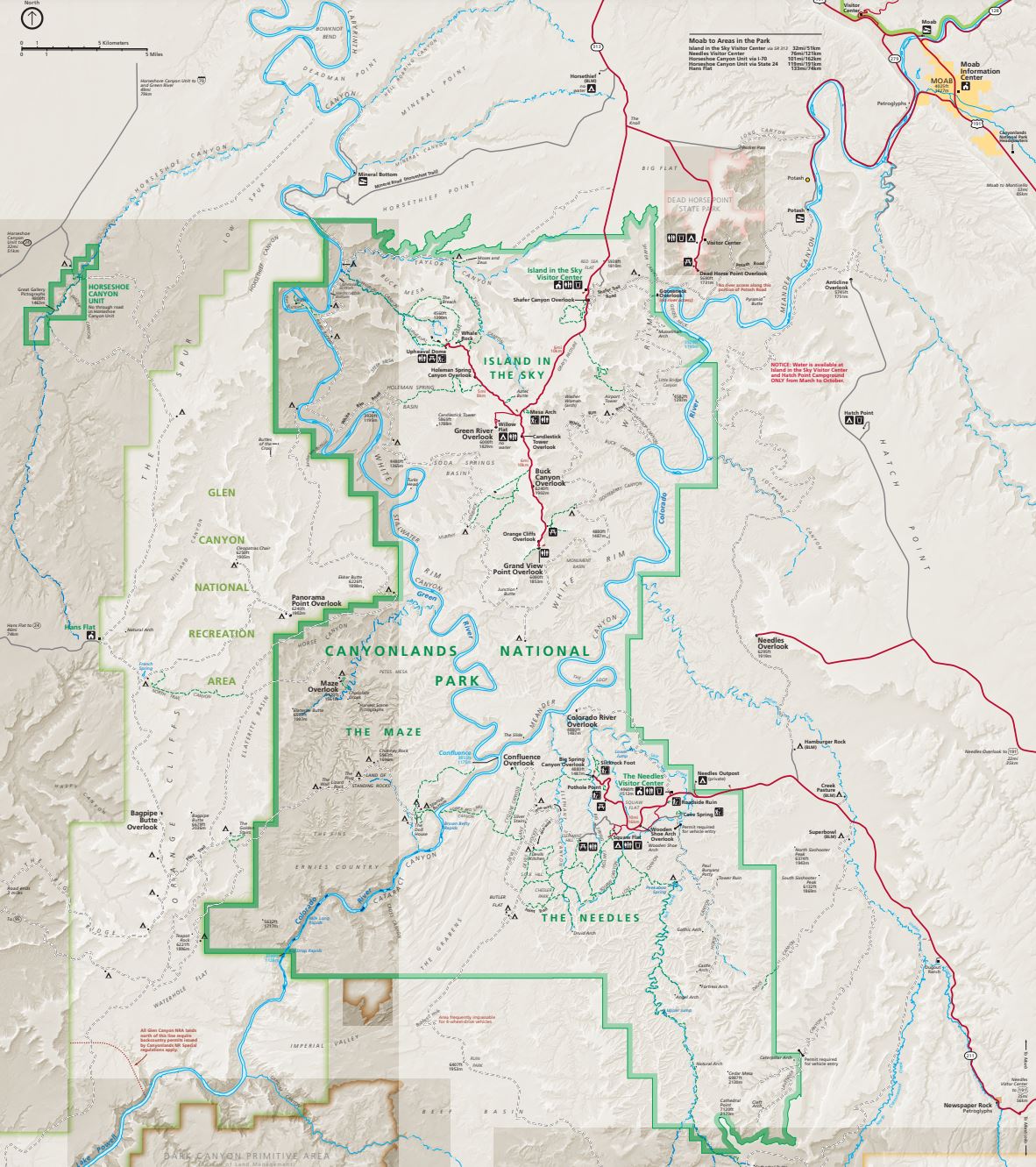
Today we left Moab to visit the southern “Needles” section of the park. A park ranger at Arches highly recommended we visit the “Needles Overlook.” She said “not many people go there because it’s out of the way but it’s worth the drive. You’ll be the only ones there in the morning.” It really is a long, lonely drive, we almost turned around but eventually arrived at an incredible view of why the two halves of the park are not connected.


Leaving “The Needles” we headed north back to Moab stopping at a roadside attraction: Wilson Arch.


5 of 12 – 2024 Fall Trip West Series.


Our first hike on the “Devils Garden Trail” started out chilly and got pretty warm by the time we got done. The trail goes to several scenic sites but the main goal is the thin “Landscape Arch”.


Our next hike was to Skyline Arch Trail. Jennie & Roni at Skyline Arch.


Sand Dune Arch Trail was next. Becky and Deanne navigate a narrow passage.


Delicate Arch Trail was longer and it was getting really hot so we didn’t go all the way to the Arch.


Balanced Rock.


We went out to dinner in Moab after a long day of hiking and driving through Arches National Park. The onion rings were a big hit.
4 of 12 – 2024 Fall Trip West Series. While at Glenwood Springs, CO for two nights Deanne rented a car that we all would use for our visits to National Parks in Utah, and we visited the Colorado National Monument.

Below is a map of “US Terrain Regions” as mapped by the US Geological Survey. When we left Indianapolis in the Central Lowland Plains, traveling west through the Great Plains, then crossing the Rocky Mountain System, we arrived at the Colorado Plateau(s). I thought we were just headed to a bunch of National Parks in the Utah vicinity. I had no idea there was a name for this densely packed geological wonderland called “The Colorado Plateau”
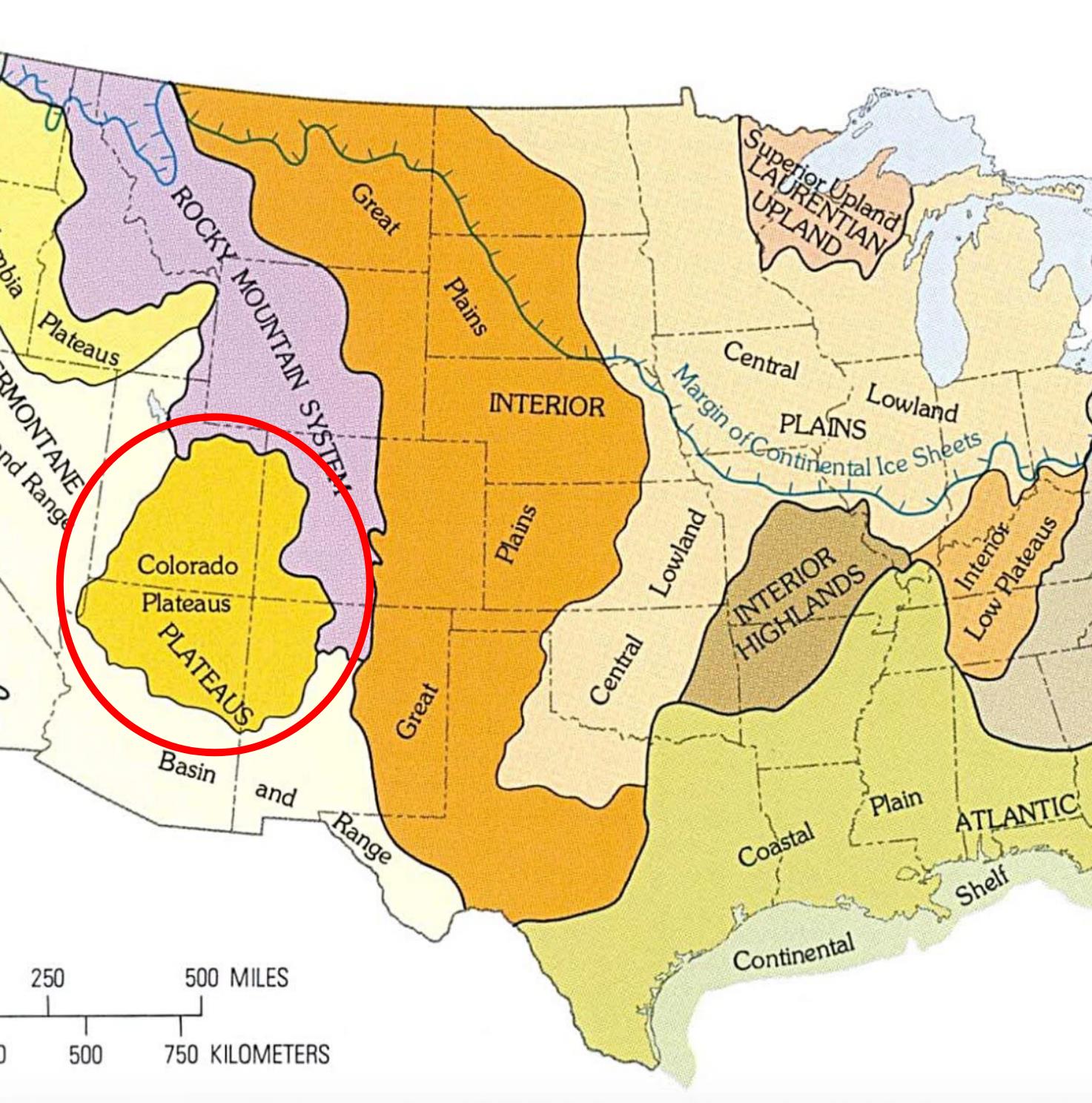

The Colorado Plateau – “the least tamed area of the lower 48 states.” The Colorado National Monument was the first of many National Parks all included in the Colorado Plateau.

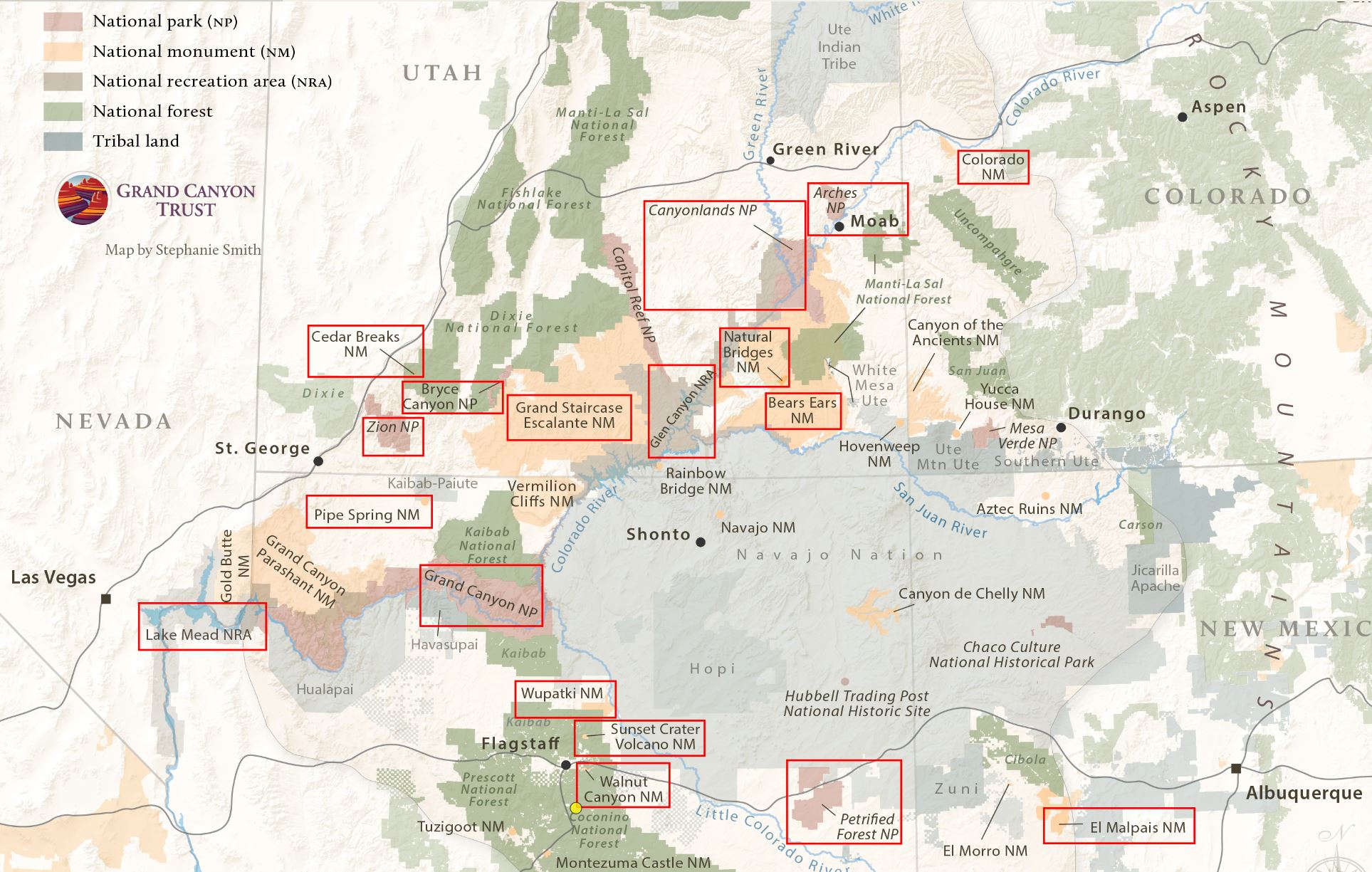
Another map of the Colorado Plateau area; marked with places we visited for National Park Stamps. Starting September 20th at the upper right (Colorado National Monument) we traveled generally counter-clockwise, eventually arriving 20 days later at the Albuquerque Balloon Fiesta October 9th.

The Rental Car: We went to the airport in Grand Junction, CO to pick up a rental car. The first one they gave us had a serious alignment problem so we rejected that one and got an enormous GMC Denali.

Leaving the RV behind for the day, we took the rental car to spend the day driving through Colorado National Monument. It was an amazing day. Jennie had told us it was worth visiting but it does not get near as much publicity as the big Utah National Parks so I wasn’t expecting anything spectacular. It is spectacular.


Hoodoos, Deanne, and the three amigo tourists at Colorado National Monument.


3 of 12 – 2024 Fall Trip West Series. This post covers 6 days in Colorado on our way to Utah.


Garden of the Gods is a registered National Natural Landmark. Visiting the park is free because of Charles Elliott Perkins and his family. Perkins was head of the Burlington Railroad and died in 1909. Two years later his children donated the land to Colorado Springs under stipulation that visitors would not be charged and it would be left in it’s natural state as Charles had wished.


Above: The Garden of the Gods Visitors Center is a nice place to visit. They have some nice exhibits. This is where they collect $ from people visiting the free Garden of the Gods. Good coffee, hats, t-shirts, etc.
Below: The following photos from our drives and hikes at Garden of the Gods are some favorites. It is a beautiful place to visit, especially at times of sunrise and sunset.


The rock formation at the top of the middle photo is known as the “Kissing Camels”


The Manitou Incline shares the same parking lot as the Pikes Peak Cog Train so we saw it. 2,750 steps (originally railroad ties left after the tracks were removed). 2,000′ elevation gain in less than a mile. There were lots of people hiking the Incline. Here in Manitou Springs, CO it was a very hot summer day. When we were on top of Pikes Peak it was freezing with a 21 degree wind chill.


I think we did well at the top with 40% less oxygen than we have in Indianapolis, IN (at 600′ altitude). Roni taking pics.


There is a small Visitors Center at Florissant and some huge nearby petrified tree stumps. After viewing the stumps outside, and interesting insect fossils inside, we went on to an 1878 historic Homestead cabin that is also part of the Florissant park.


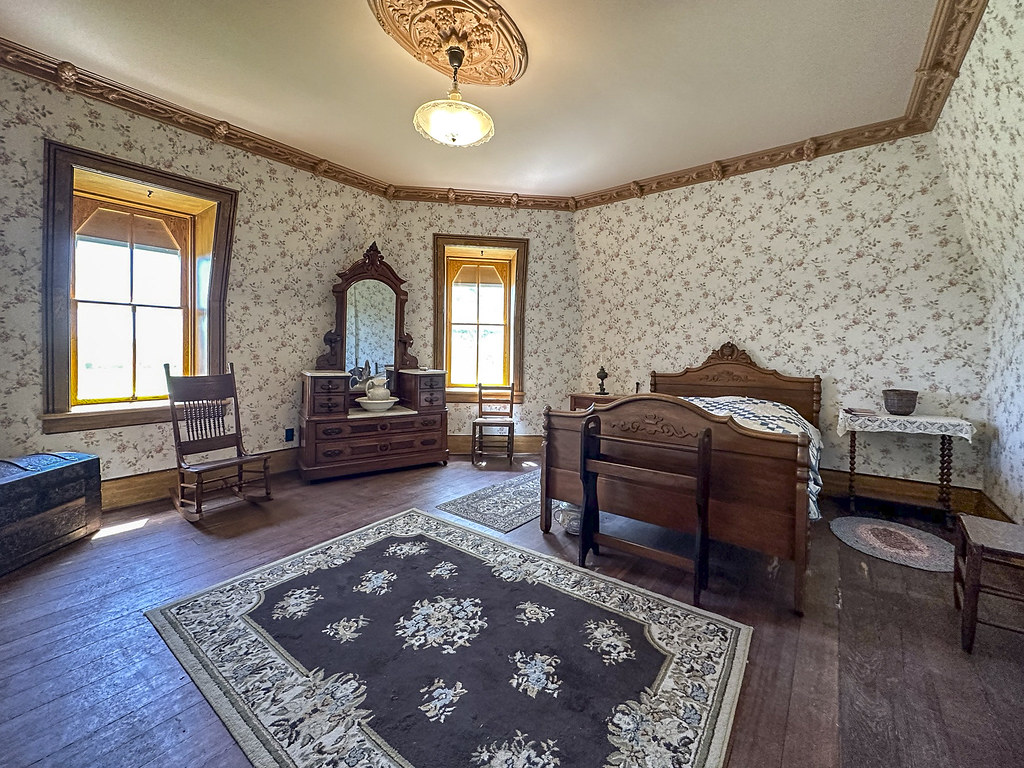
The 1878 Adeline Hornbek Homestead Cabin. Adeline came to the Florissant valley with her 4 children claiming this area of land through the Homestead Act and built it into a prosperous ranch.


2 of 12 – 2024 Fall Trip West Series. This post covers 6 days of our trip from Clay Center, KS to Colorado Springs, CO.


The Farm Animals: “Gabby” (a Great Pyrenees) protects the farm and watches over visitors. She slept right outside the RV each night to keep us safe from coyotes. I think the donkey in the photo is “Daisy” but there are also two others named “Jethro” and “Sadie.” Then there is “Ginger”, a shy puppy that rules inside the house, and of course the chickens. Not shown are a multitude of cats that run around outside.


A sobering event: we visited the Republican City Cemetery to put flowers on Daniel’s grave. Daisies were blooming nearby. The windchimes had been a gift to Lizzy from her coworkers for Daniel’s memorial service. She didn’t have a place for the chimes so Deanne took them home to Kansas. They make a nice sound at the “old milk barn” where Becky grew up milking dairy cows.


Another highlight was riding in a combine with Becky’s cousin Ron. Ron makes it look easy doing 10 things at once while cutting corn. Here’s a a very wonky video I took of the amazing experience.


Two last pics before leaving Clay Center: The latest downtown ‘mural’ painting on a grain bin is called “Prairie Thunder” by Christian Stanley. It is awesome and so was the sunrise view from our RV. The mural recently won viewers choice in 10th place of “Best Murals of the World” and was the only mural in the top 50 located in the United States. Go Clay Center! Here’s a link to recent mural article: https://kclyradio.com/blog/prairie-thunder-lands-10-in-international-competition-of-best-murals-of-the-world/
The Kamphaus farm driveway is right on US Highway 24. We jumped right on 24 and headed West to a must-see Kansas attraction at Cawker City: “The Worlds Largest Ball of Twine”… circumference 46 feet


We stayed long enough to see the amazing sight… and read some signs explaining the history of the giant ball of twine.
Here’s how it began: Frank Stoeber was born in 1891. At the age of 62, in 1953, he stumbles across some twine and decides to gather it up to burn. Instead of burning it, he decides to roll it up into a ball. He must have enjoyed that, or there wasn’t much else to do in the 50’s (when I was born) because three years later, in 1956 the ball is 7′ around and weighs over 4,000 pounds. It progresses from there. You need to visit for the rest of the story.


Directly across the street (highway 24) was a restored old gas station that was more photogenic than the twine.

Next stop heading West was the National Historic Site Visitors Center in Nicodemus, Kansas. The town was founded in 1877 by recently freed African Americans, mostly from Lexington, Kentucky. It’s the oldest and only remaining Black settlement west of the Mississippi River.
This was an interesting place to visit. The visitors center is the nicest building in what is now a very small, nearly abandoned town. The 2020 census counted 14 people, 78% African-American. Some of the towns people and nearby residents are direct descendants of the original founders. I am so glad we stopped to see the town and learn the history of this place and period of American history. I am also glad my tax dollars are preserving a history that would otherwise by lost.

The founding of Nicodemus is tightly connected to the Homestead Act (visit to that National Historic Site is described in previous post) and Emancipation.


Still traveling West we visited a Kansas geological attraction:


People say “middle of nowhere” all the time but this remote State Park should be the definition. Early settlers called the area “Little Jerusalem” because they thought it resembled the ancient walled city of Jerusalem. Some also called it “Castle City”.


Moving on we drove a bunch of dusty dirt roads to arrive at another Kansas geological landmark called “Monument Rocks”. This place is just plain weird. There are no signs, no visitors center. If there was a sign it would say “No Really; the middle of nowhere”.


We met back up with Jennie and Roni (they did not do all the sightseeing we did on this first day) and stayed the night in Colby, KS. We stopped at Walmart on the way out of Colby so Deanne could buy another foam mattress topper for the uncomfortable overhead bunk bed… We continued on to Colorado Springs. But that’s a story for the next post.

1 of 12 – 2024 Fall Trip West Series. We traveled west to Utah and back; about 6,000 miles over 49 days from Sept 10 to October 30, 2024.
Here is a List of some interesting places we stopped at on this trip (bold/italic stops are where we got National Park Service Stamps), tan ALL CAPS hyperlinks to pages:
1– HOME TO CLAY CENTER, KS
Lincoln Home: National Historic Site, Springfield IL
Hamilton, MO (quilt shops)
International Quilt Museum, Lincoln NE (at Univ. of Nebraska)
Homestead National Historic Park, Beatrice NE
Pony Express Barn & Museum, Marysville KS
2– KANSAS
Nicodemus National Historic Site, Nicodemus KS
Little Jerusalem Badlands State Park, Oakley KS
Monument Rocks National Historic Landmark, Oakley KS
3– COLORADO SPRINGS
Garden of the Gods, Colorado Springs CO
Pikes Peak Cog Rail, Colorado Springs CO
Florissant Fossil Beds National Monument, Florissant CO
4– Colorado National Monument, CO
5– Arches National Park, Moab UT
6- Canyonlands National Park, (Needles) Moab UT
Needles Overlook, Newspaper Rock, & Wilsons Arch
7- Canyonlands National Park, (Island in the Sky) Moab UT
Dead Horse Point State Park
Bears Ears National Monument?
John Wesley Powell River History Museum
Capital Reef National Park, Torrey UT
Grand Staircase-Escalante National Monument, UT
Bryce Canyon National Park, UT
Cedar Breaks National Monument, UT
Valley of Fire State Park, Moapa Valley, NV
Hoover Dam National Historic Landmark
Pipe Spring National Monument, Kaibab AZ
Grand Canyon National Park (North Rim)
Zion National Park, Springdale UT
Glen Canyon Dam & National Recreation Area, Page AZ
Horseshoe Bend, Page AZ
Sunset Crater Volcano National Monument
Walnut Canyon National Monument, Flagstaff AZ
Petrified Forest National Park
Albuquerque Balloon Fiesta, Albuquerque NM (Adventure Caravans 6 day RV rally)
Valles Caldera National Preserve, Jemez Springs NM
Manhattan Project National Historical Park, Los Alamos, NM
Pecos National Historical Park, Pecos NM
Tucumcari Route 66, Tucumcari NM
Cadillac Ranch, Amarillo TX
Fort Smith National Historic Site, Fort Smith, AR
Crater of Diamonds State Park, Murfreesboro, AR

We needed to do some “RV Prep” a few weeks before starting this trip when we discovered the front window was leaking at the top edge around the seal. Also added some back tail lights to be more visible.
If you want to skip the “RV Prep” section, jumping right to the Trip, click here: –>#Trip
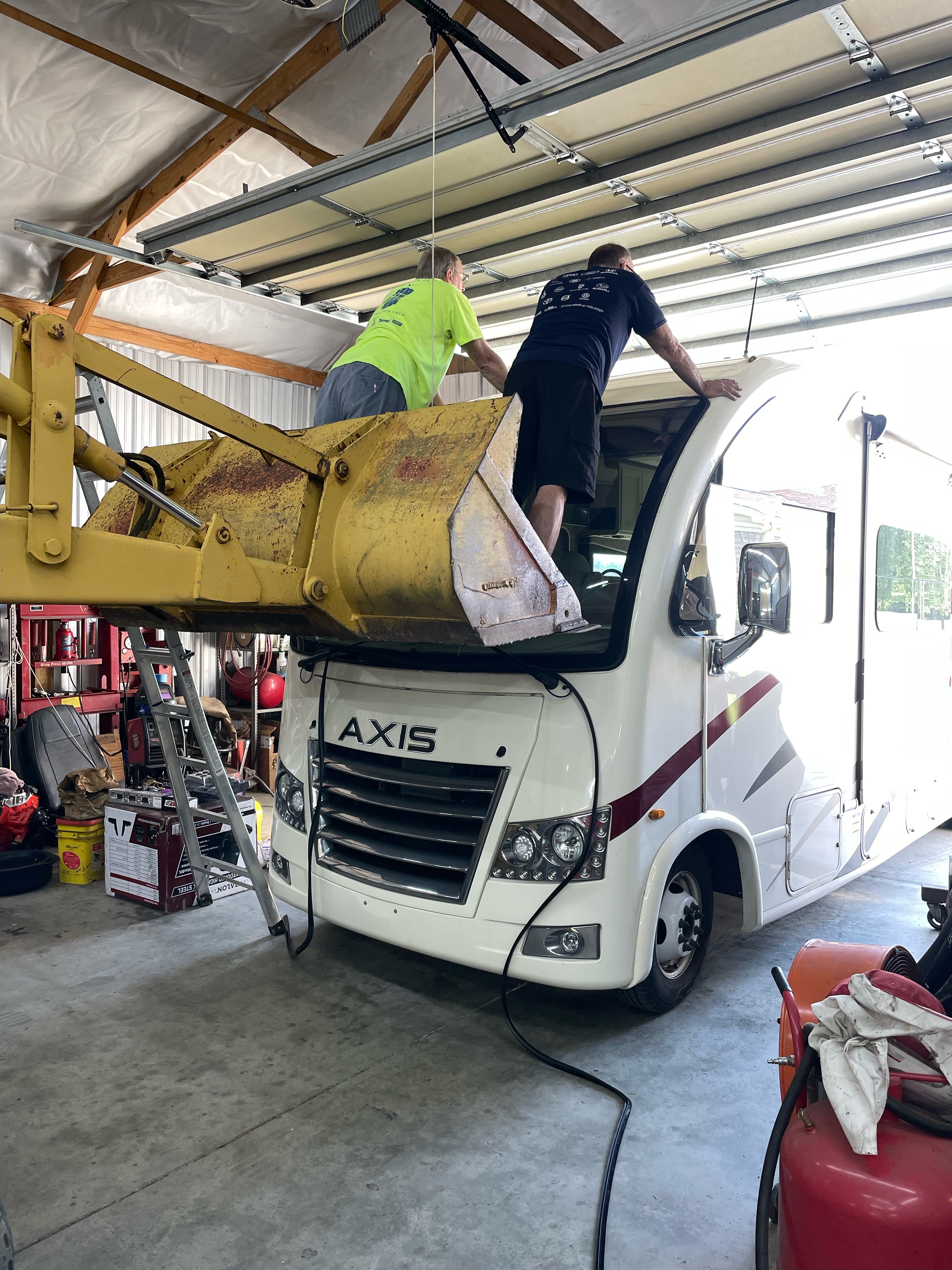


Plan ‘B’ was to rent scaffolding from Menards, mask around the upper windshield and install sealant to close the gaps. As it turned out we had almost no rain for the entire trip but since being back we have had plenty of rain, snow, and ice with no leaks.


Starting the Trip: with the RV ready to go we headed West early in the morning of September 10th. Our first stop for a National Park Service Stamp was Abraham Lincoln’s Home in Springfield, Illinois.


Above: Two other interesting old homes in the historical area.

After the Hamilton stop we drove on to Lincoln, Nebraska where we stayed overnight at “Camp a Way”. In the morning we packed up and went to Nebraska University to visit the International Quilt Museum; also known as the “Quilt House”.


I thought this quilt museum stop would be great for Becky and boring for me. It turned out great for both of us. The quilts were amazing and the architecture to display the quilts was also amazing. The brick and stonework were quilt block patterned. Even the bathroom wall tiles had ‘quilt’ patterns.


Transparent pattern quilts and a ‘quiltish’ Abraham Lincoln poster linked together our visits to Lincoln’s Springfield, IL home yesterday, and Lincoln’s role in the Homestead Act which we would go to visit next.


The last Homestead patent was issued in 1988. I was 33yrs old and had no idea that it was still possible to apply for a Homestead Patent.


Preface:
Seven years ago (2016), while Becky and I were still working, we flew to Spokane, WA. for a whirlwind visit to Glacier National Park and the Canadian Rockies. We met up with Becky’s sisters Jennie and Deanne and Jennie’s partner Roni. That trip was breathtakingly majestic. We all wanted to go back someday. This more leisurely trip with our friends John and Pam Hanson was to be “the longed-for relaxing return visit.” The main goal was to enjoy an extended, unhurried time in the beautiful Jasper (#11 on the map), Kootenay (#12), and Banff areas (#13).


Part 1 – FROM INDY TO JASPER NATIONAL PARK
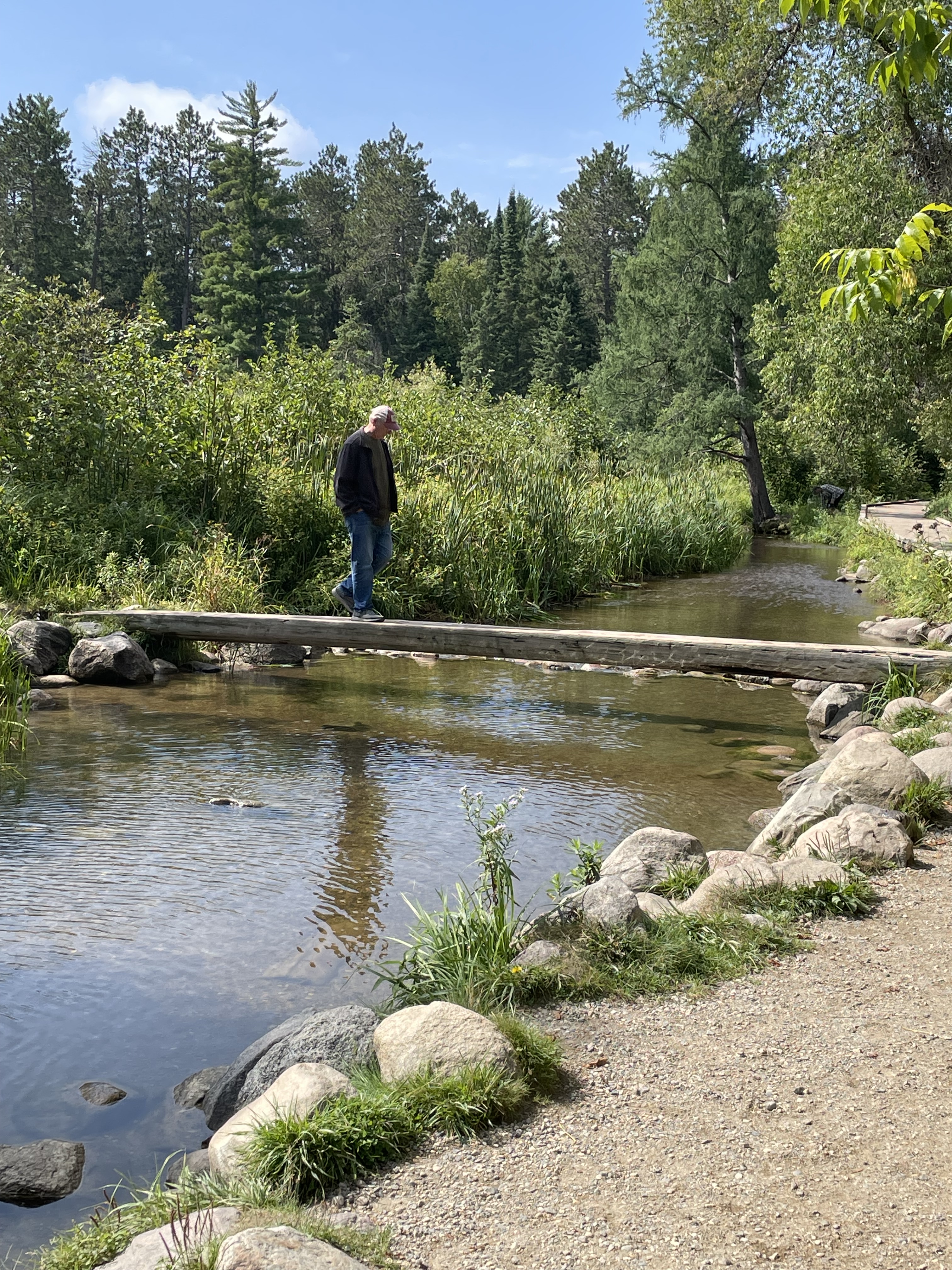
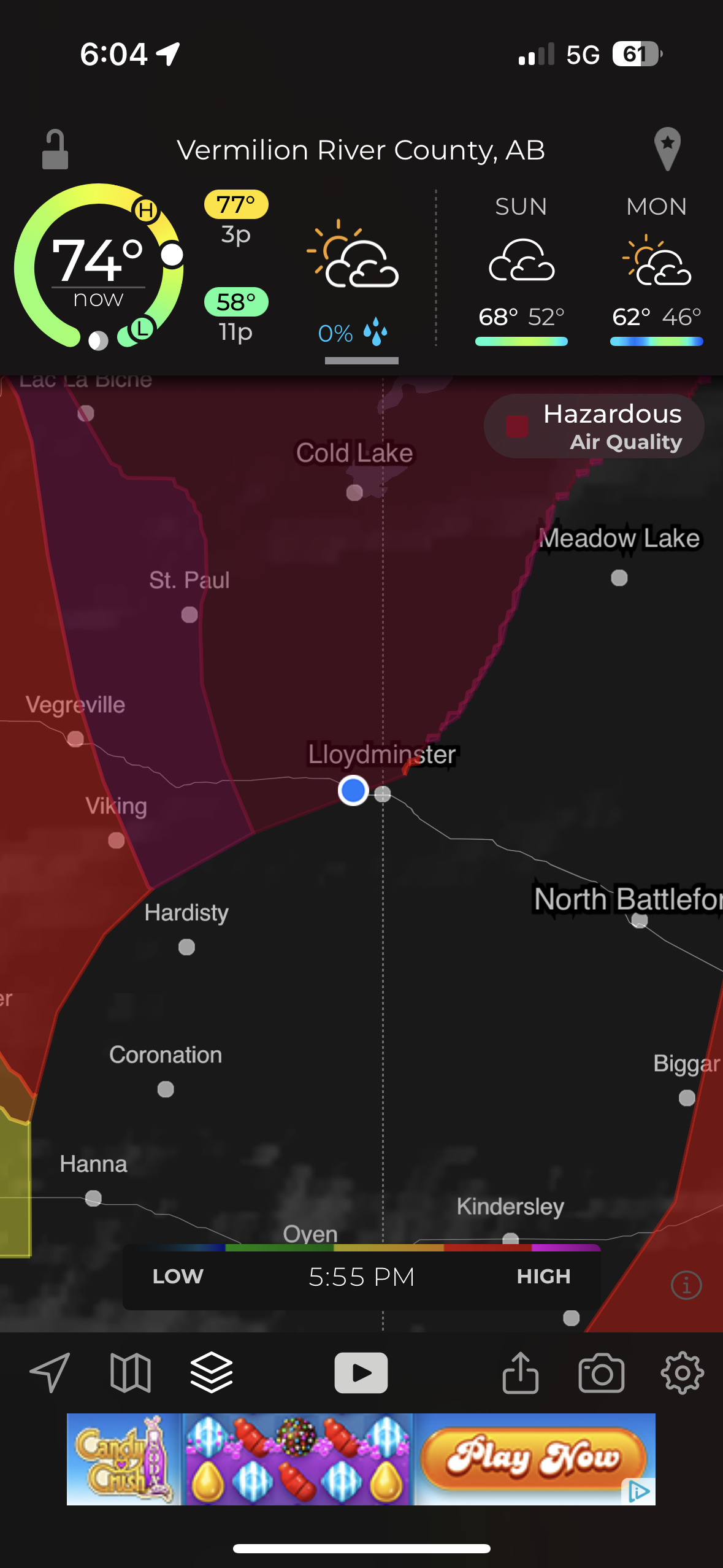
First stop – Indiana Dunes National Park/State Park (the campground and nearby areas are a State Park within the larger National Park). This was a stop we added at the last minute when we learned that our friends Bob and Lisa were going to be there and we could visit with them. I was looking forward to visiting Indiana Dunes. I thought I would enjoy lots of memories and ‘Deja-vu’ moments from childhood family weekend visits and camping trips in the sandy campground. Turns out I was wrong. My memories were from the Michigan “Tower Hill” Warren Dunes State Park which is closer to South Bend where I grew up. We stopped on our way to the campground at the National Park Visitors Center to get the stamp for one of America’s newest National Parks. We enjoyed the day and discovered a park I had absolutely no memories of. Unfortunately, on Monday night I began to feel poorly. Tuesday morning I tested for covid and was negative. Two days later I would test positive for covid. The weather started to really get hot so we looked forward to quickly getting further north and cooler temps. To finish the covid saga of the next two weeks; I got it, then when I started feeling better, Becky got it. Providentially, we were both over it by the time we met up with John and Pam in Canada.





Part 2 – JASPER NATIONAL PARK
Jasper Day 1 – Old Fort Point and Five Lakes Hike
Becky was feeling better but wanted to wait one more day to be certain of not exposing John and Pam to covid. She stayed behind on this first day trip from Hinton KOA into Jasper National Park. The air was still smoky from wild fires but clearer then it had been on the trip into Hinton. The drive each day from Hinton into Jasper National Park (and back) took about an hour but each day the scenery was different and we almost always saw some beautiful sites and lots of wildlife.


Jasper Day 2 – Maligne Canyon and Maligne Lake


The next 4 photos show where swirling rocks and water have worn away smooth ‘pot holes’


Jasper Day 3 – Athabasca Falls and Sunwapta Falls


Jasper Day 4 – Mt. Edith Cavell


Mount Edith Cavell is named after a British nurse executed during World War I for her part in helping Allied prisoners escape occupied Brussels.
Photos below from our visit in summer 2016 compared to 2023.


Below: John making careful rock selections (notice the distended pockets) and posing by high elevation pine tree.


A little post-trip travel analysis:
This is all based on only our RV mileage (we traveled lots of other miles in Jasper NP with John & Pam in their van).
4,636 miles according to RVparky route, 4,691 actual miles.
436.25 gallons of gas. Cost – $1,761.77 for average cost/gal $4.04
10.75 miles/gal
22 nights/23 days total = average of 204 miles/day
13 different overnight places/14 days of traveling = 335 average miles per travel day
Our longest Travel Days were the days coming home:
1st day: 638 miles from Hinton, British Columbia to Ponderosa Campground, Swift Current, Saskatchewan
2nd day: 362 miles to Old Settlers Park in Burlington, ND (includes border crossing)
3rd day: 623 miles to Stoney Creek RV Resort, Osseo, WI
4th day: 530 miles to Home = 2,153 miles home.
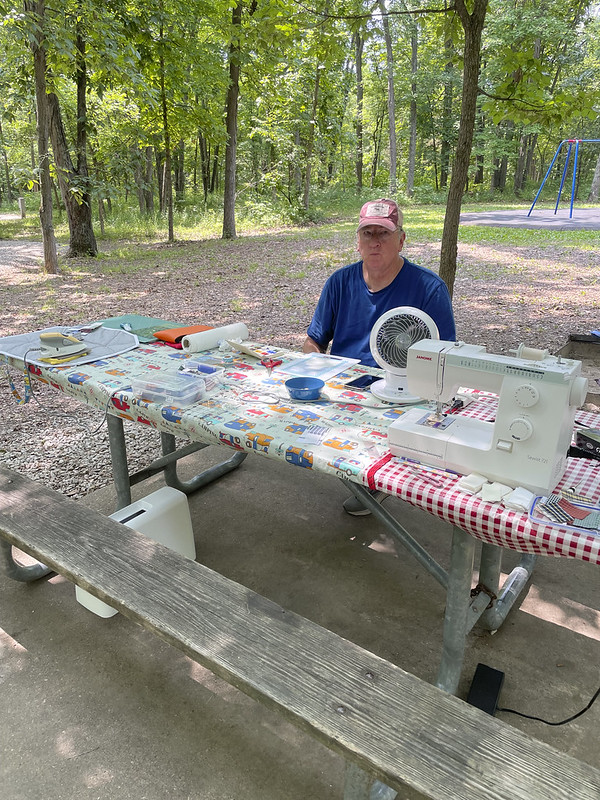
This is about our trip west for family gatherings in Kansas and Missouri, June 14 to June 30. It is also our first post composed entirely of iPhone photos. I had the big camera but never bothered to pull it out.
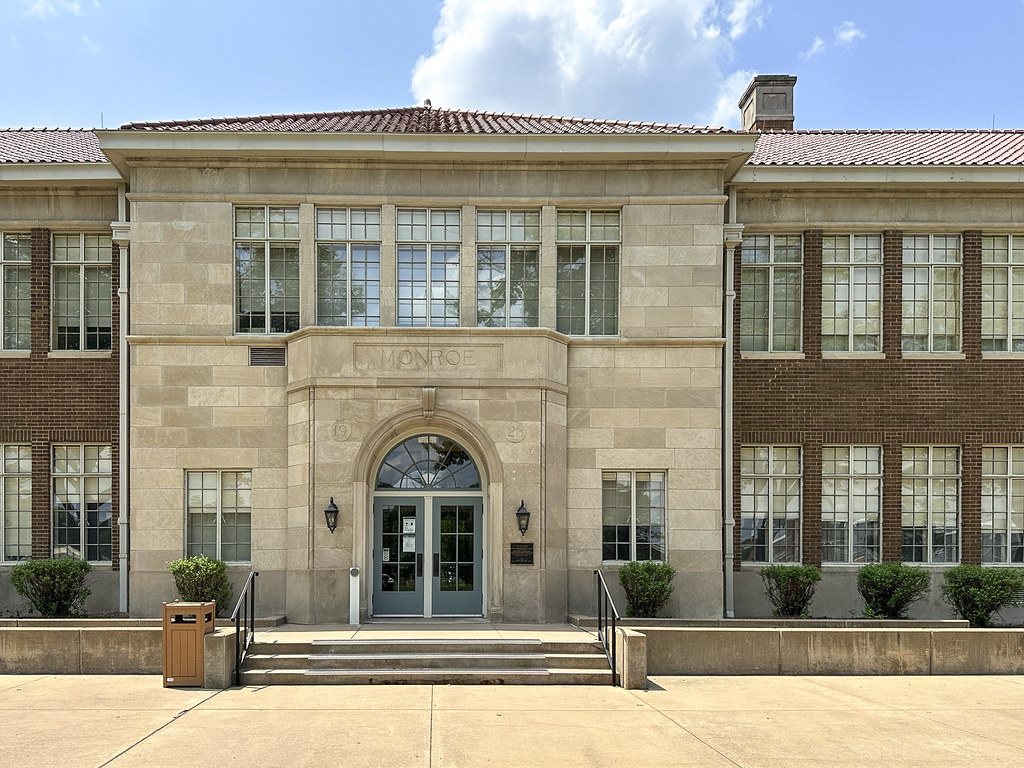

We stopped here on our way from Mark Twain State Park to the Kansas Family Gathering at Acorns Resort on Milford Lake in Kansas. On our many trips to Kansas over the last 40 years we have driven past Topeka and the signs for Brown v. Board of Education NHS. This is a thought provoking bit of historic preservation. Wish we had taken time to stop with the kids but we were always in a hurry to see family.


Brown v. Board of Education originated as a class action lawsuit in Topeka in 1951 and was ruled by the Kansas District Court in favor of the Board of Education. The case that later went to the Supreme Court was a combination of 5 different lawsuits (all of which had failed to the local Boards of Education). They were from Topeka-Kansas, South Carolina, Virginia, Delaware, and Washington DC. The combined case was brought to the Supreme Court by the NAACP. Thurgood Marshall at that time was chief counsel for the NAACP and argued the case for the plaintiffs. Thurgood Marshall would later be appointed to the Supreme Court in 1967.


It is hard for me to wrap my head around some of the things happening around the time I was born… I know I’m old but I tend to think of stuff like this happening back in my grandparents day.


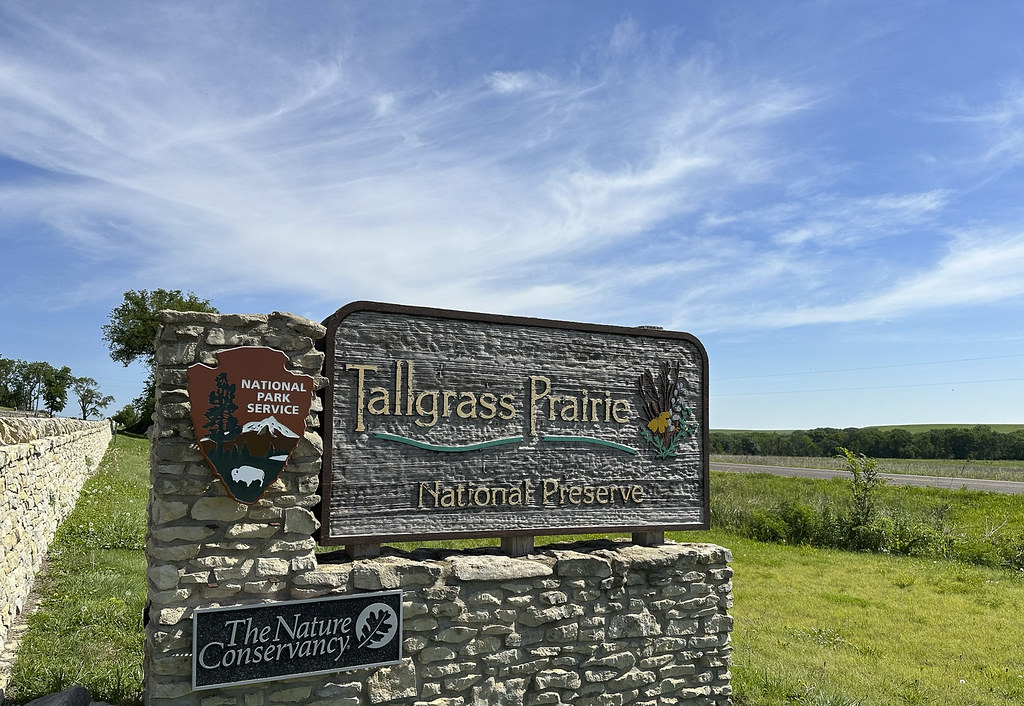


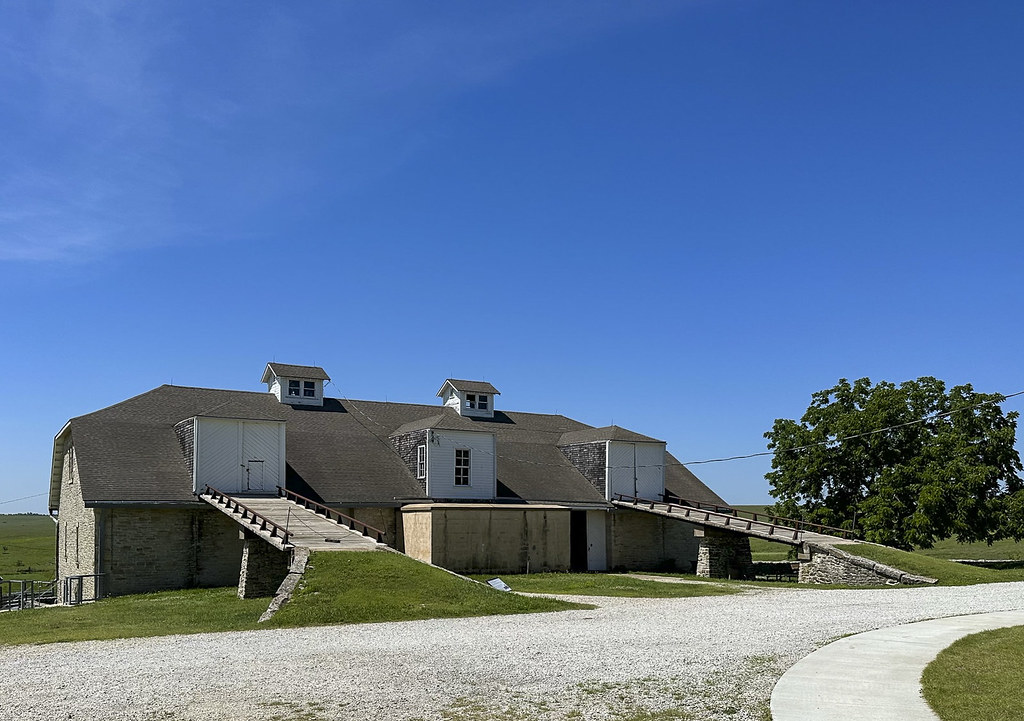


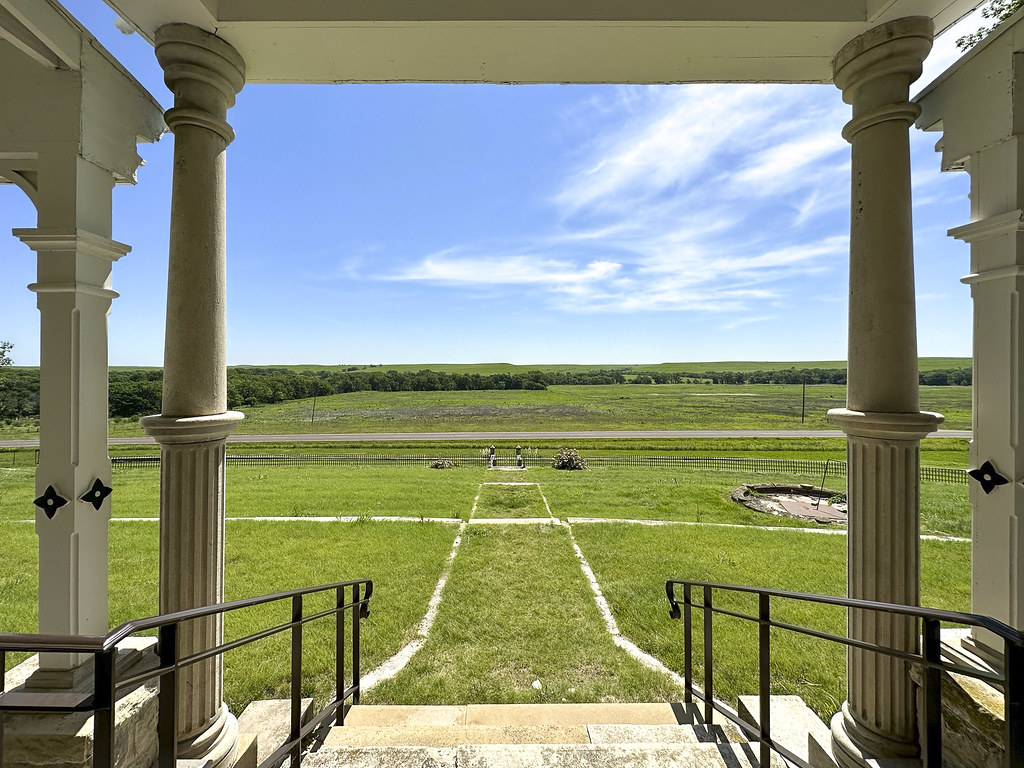









Wrap-up: 1,845 Miles total. 16 days. 10.11 MPG avg. $3.16/gal avg. $576 for gas. $130 for alignment and tire rotation in Joplin. We drove some really hot days with the RV (gasoline) generator running so we could run the house air conditioning and the engine AC. Running the generator seems to reduce MPG by about .3 MPG. We now have over 20,000 miles in the RV and will add another 6K this fall with trip to Canadian Rockies.
13 of 13 Jekyll Island Trip Series.
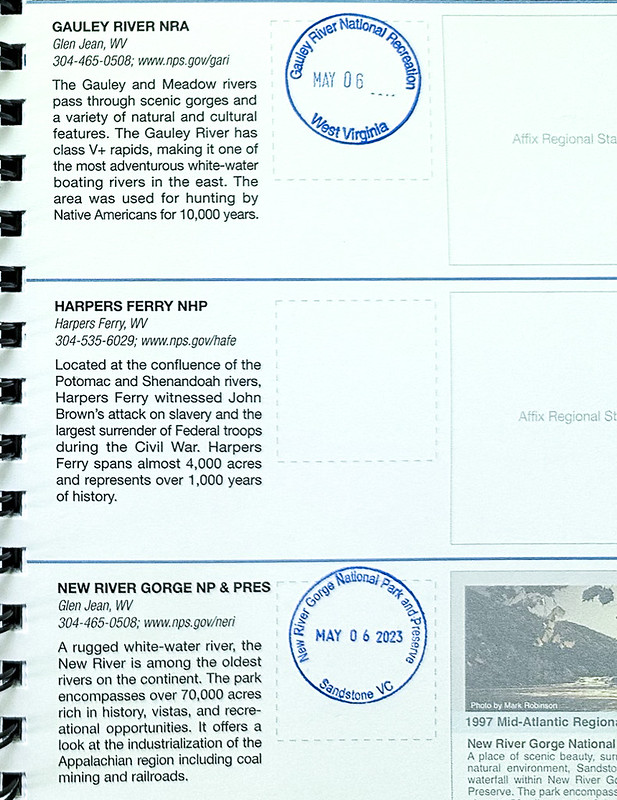
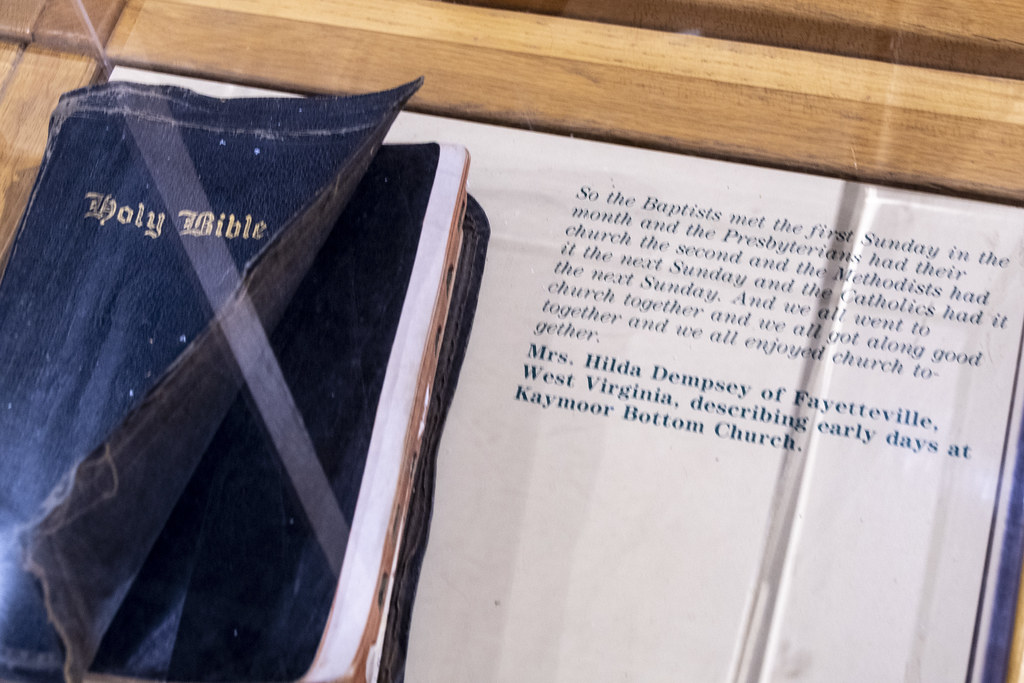
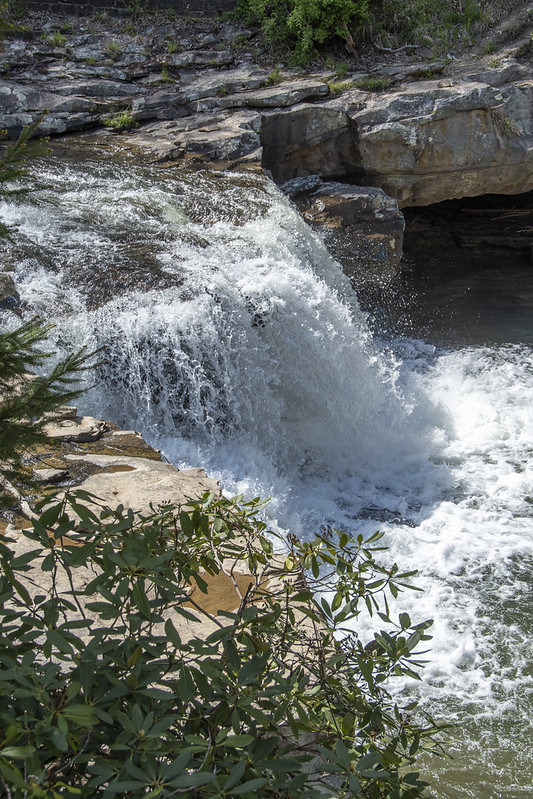
The New River Gorge National Park and Babcock State Park in West Virginia were our last stops of this trip.




Would like to come back to visit in the fall when it looks like this! Photo snip from website noted above. According to the website it is the most photographed mill in the US.
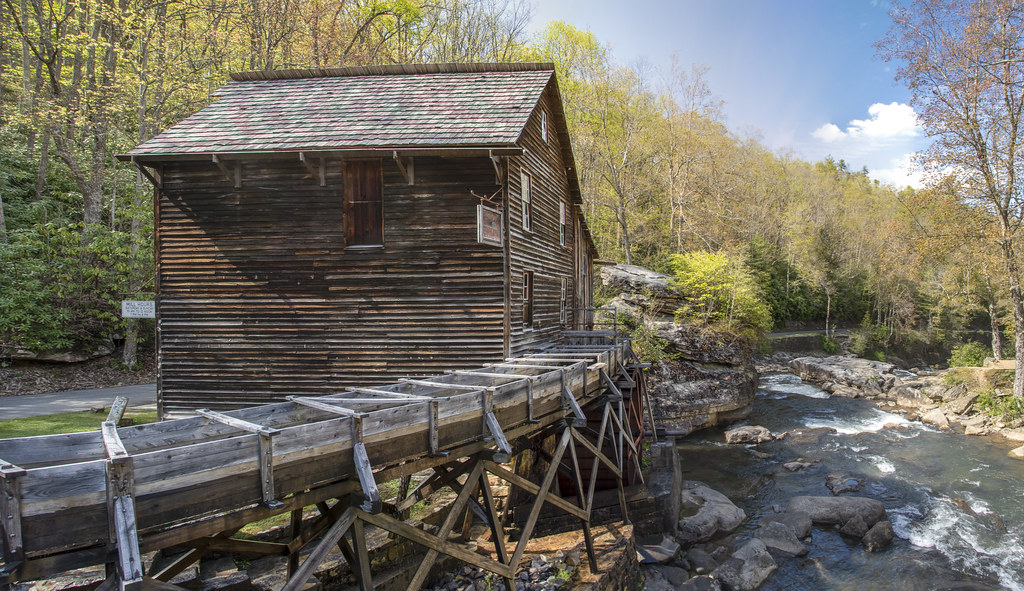
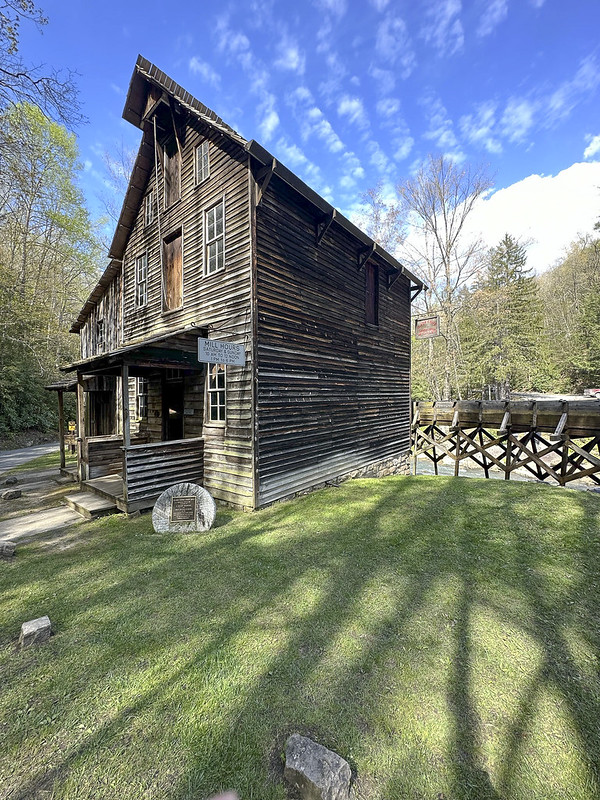

More pics of the mill. Getting these pics was providential. If we had known how small and tight the parking lot was we probably would not have taken the RV down to this mill. We just followed the sign that said entrance to Babcock State Park (which really meant just the entry to this mill and a bunch of cabins) and wiggled our way into a parking space. The campsites were at a different entrance further down the road. Alas, there were no signs telling us that…


12 of 13 Jekyll Island Trip Series.
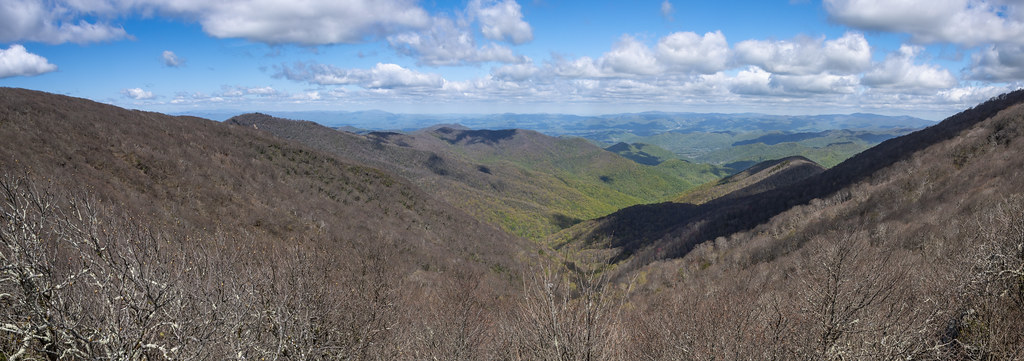
We drove the Blue Ridge Parkway on two beautiful sunny days, May 3 from Asheville to Boone, NC and May 4 from Boone to Fancy Gap, Virginia.
Windy Video.


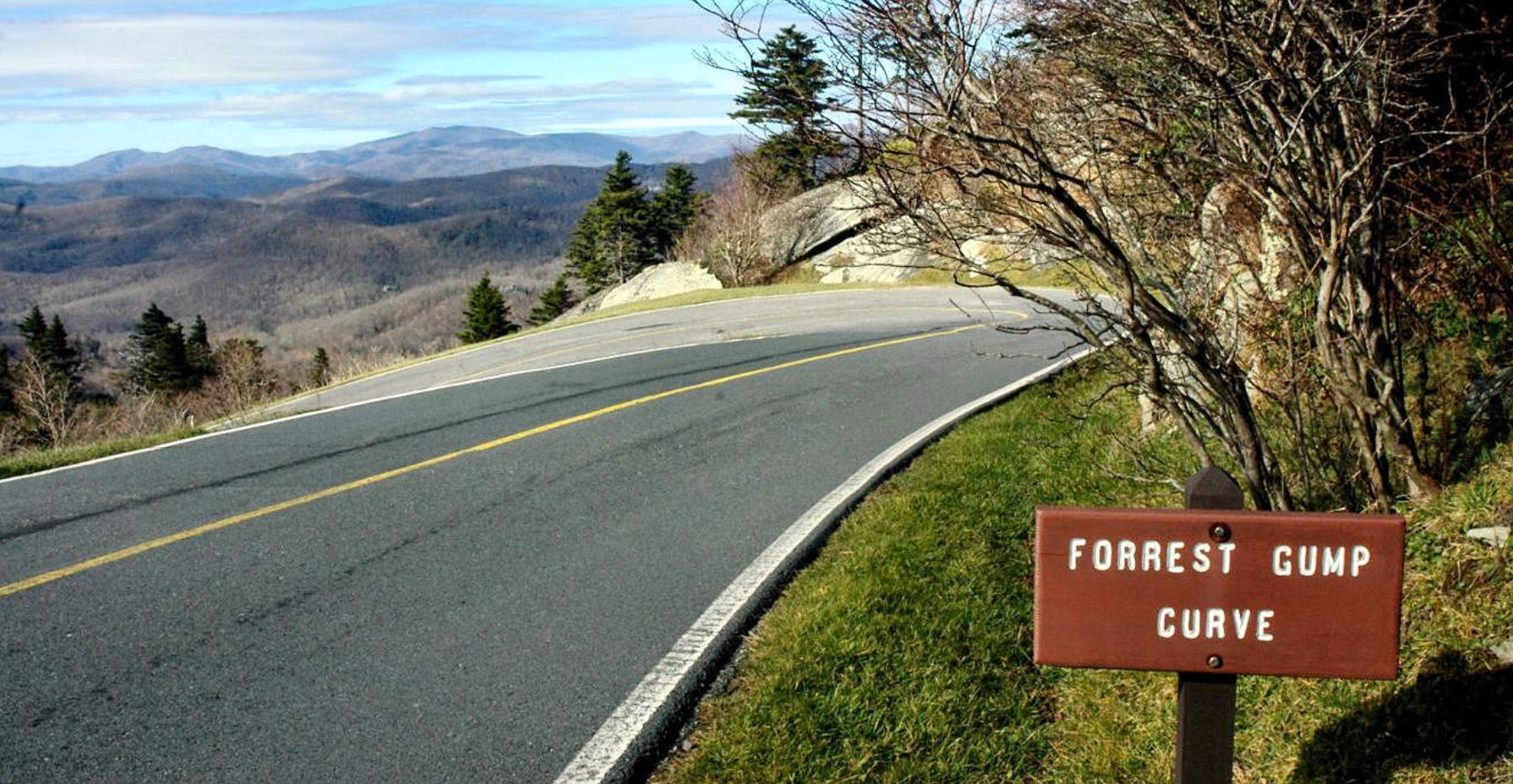
Trivia: This is not the Blue Ridge Parkway (and not my photo), but it must be noted (for history’s sake) that for 5 seconds in the Forrest Gump movie he is running around this curve of Grandfather Mountain.

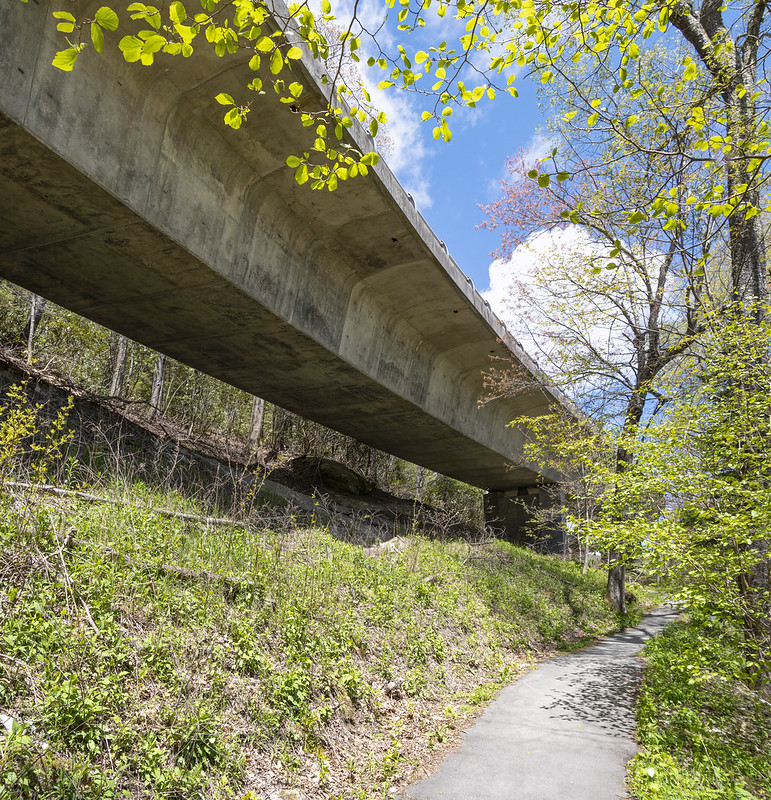

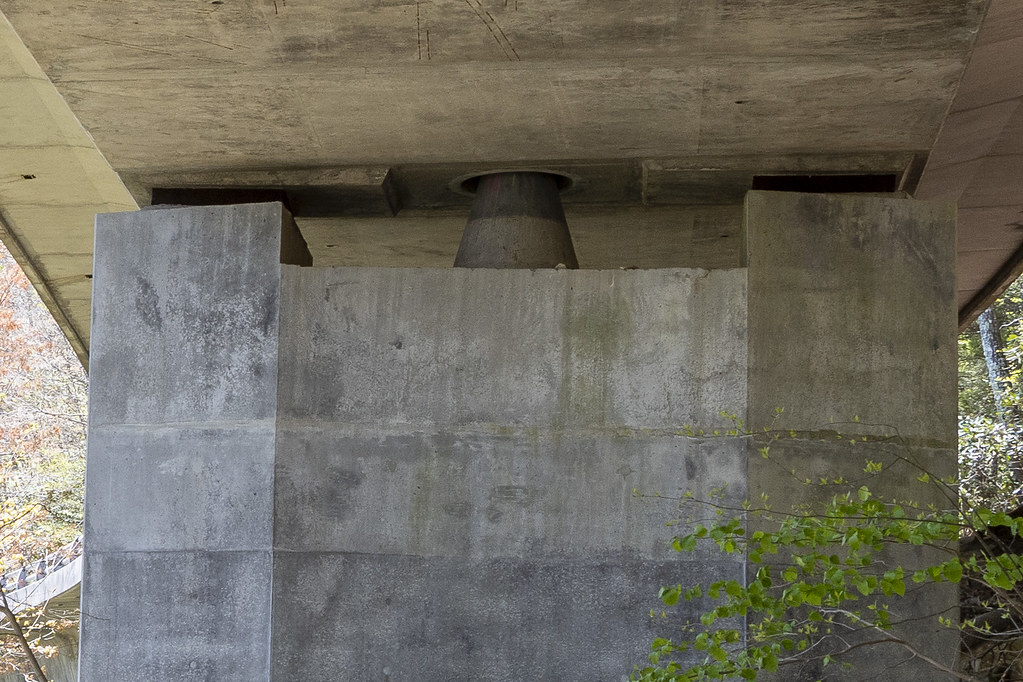

I know it’s nerdy but I thought it was interesting that the entire viaduct “balances” on the point of cones on the seven piers.
Here’s a link to more info on the Linn Cove Viaduct from NPS: https://www.nps.gov/blri/learn/historyculture/linn-cove-viaduct.htm#:~:text=The%20viaduct%20was%20constructed%20from,heavy%20equipment%20on%20the%20ground.


A Trio of Trilliums from our hike on Cascades Trail.


Mountain Laurel has interesting stringy bark.


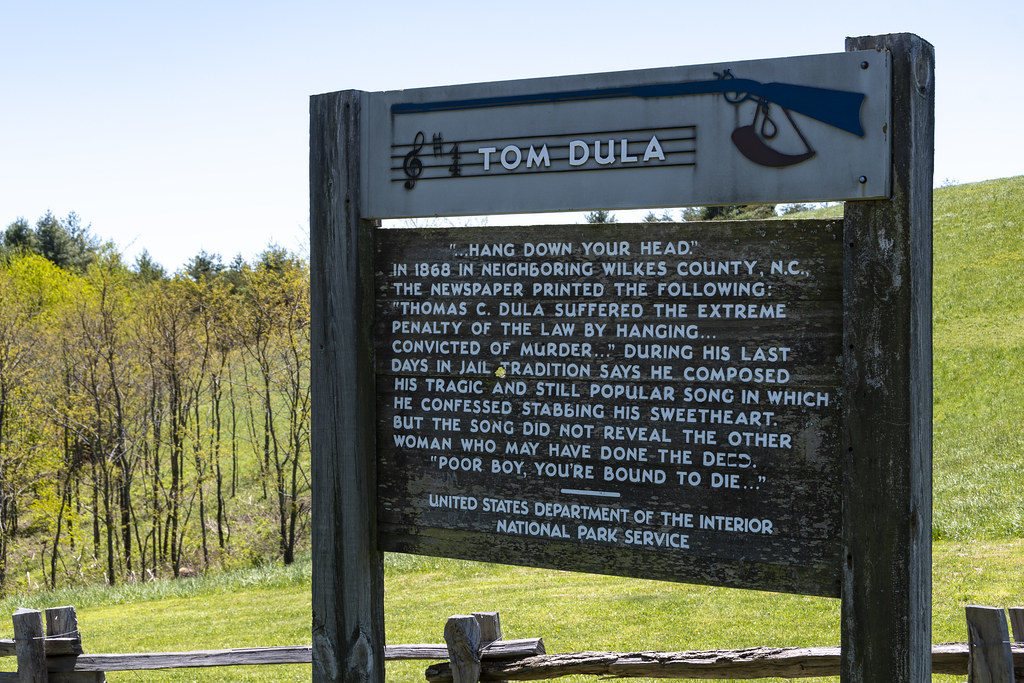


Thoughts on the Blue Ridge Parkway;
It’s a wonderful experience to drive for three days and never see a billboard, never see power poles and power lines, never see a semi-truck, never see a McDonald’s or any other of the ubiquitous stores that are seen at every intersection of an interstate. Each evening, when we got off the Parkway to camp, it was with a sense of loss, not comfort, to again encounter traffic, and traffic lights, and the cacophony of development stimulus we have become acclimated to.
The three driving days on the Parkway were similar in many ways but different in a few:
1. From Cherokee to Asheville, the scenery was very wooded and mountainous with lots of tunnels through the mountains and lots of steep uphill’s and downhills. Very few intersecting access roads and an awareness that there is nothing as far as the eye can see.
2. From Asheville to Boone, the scenery was less wooded, less tunnels, and a bit more gentle grades. More access roads and seeing towns and a few houses off in the mountains.
3. From Boone to Fancy Gap, the scenery is pastoral, with some open fields and gentle rolling pastures. Cattle and horses and passing some farms and towns within sight of the Parkway. I don’t remember any tunnels. Much more populated areas but still quite a secluded drive. They were beginning to start paving work on parts of this section. We encountered a closed portion and a long detour. After the detour and returning to the Parkway we waited for another section of single lane. By then it was getting late so we jumped off and took highways to Fancy Gap.
4. We enjoyed driving on the Parkway because there was almost no other traffic. We could look around, stop at any of the overlooks, and seldom saw other cars. The tunnels were not a problem. The only thing we needed to watch out for was overhanging branches but with no oncoming traffic it was easy to move over to miss them. I am sure it is a beautiful drive in the fall but I would not want to crawl along with lots of leaf peepers.
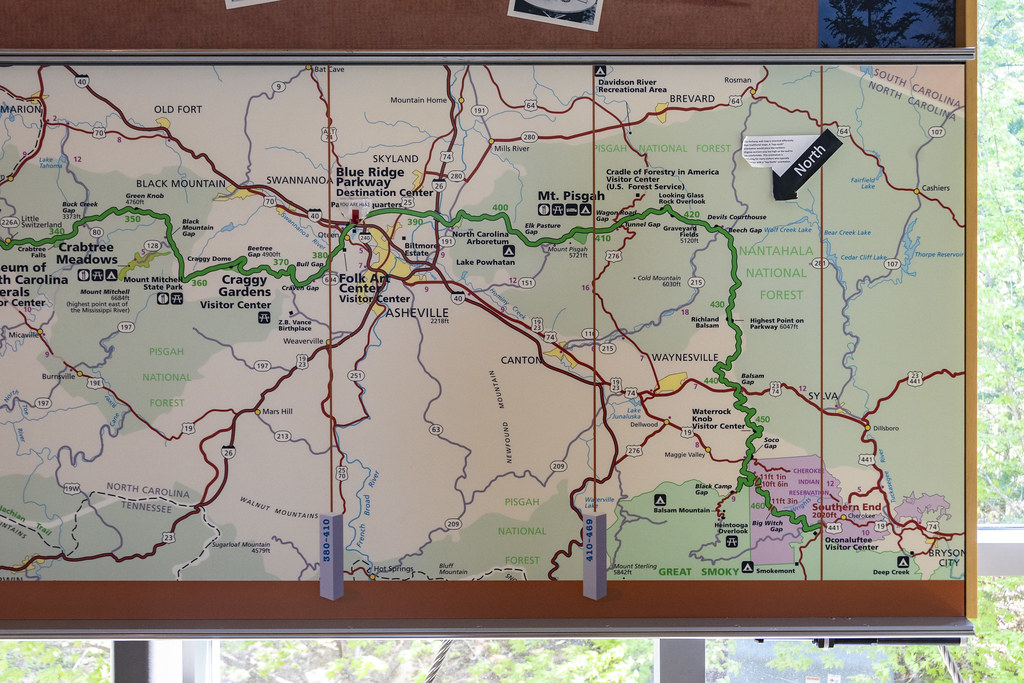
The entire BRP is 469 miles long. We drove 84 miles, from 469 at the southern end to 384 at the Asheville Visitors Center on the first day. 93 miles from 384 to Boone at 291 on the second day, and (most of) 92 miles from Boone to 199 at Fancy Gap on the third day. So we traveled (mostly) 270 miles on the Parkway (57% of the whole). Hopefully, someday, we can travel the northern end to Shenandoah National Park.
Tomorrow we leave the Blue Ridge Parkway and head north to West Virginia, New River Gorge National Park, and Babcock State Park.

11 of 13 Jekyll Island Trip Series.
The beautiful Blue Ridge Mountains. A panoramic series of shots stitched together.
Before jumping onto the Blue Ridge Parkway we filled the RV up with gas. While I was doing that, Becky went into a little restaurant for coffee and donut holes. Highly recommend Mable’s Kitchen for breakfast. They don’t have donut holes on a shelf, you order them and they put them in the fryer. They are hot, fresh, and delicious.


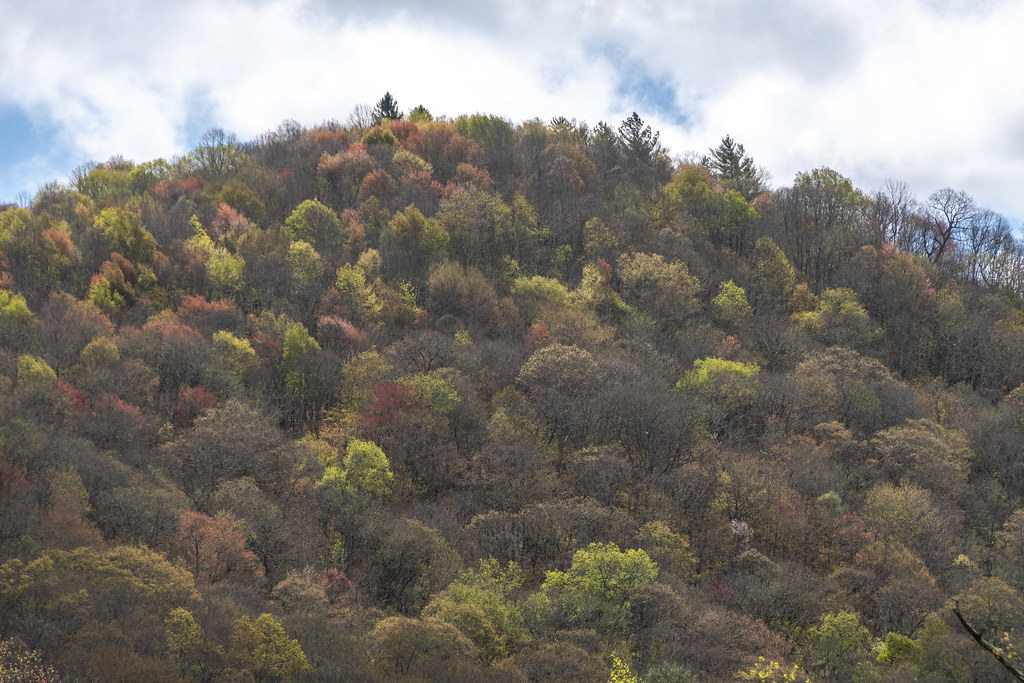

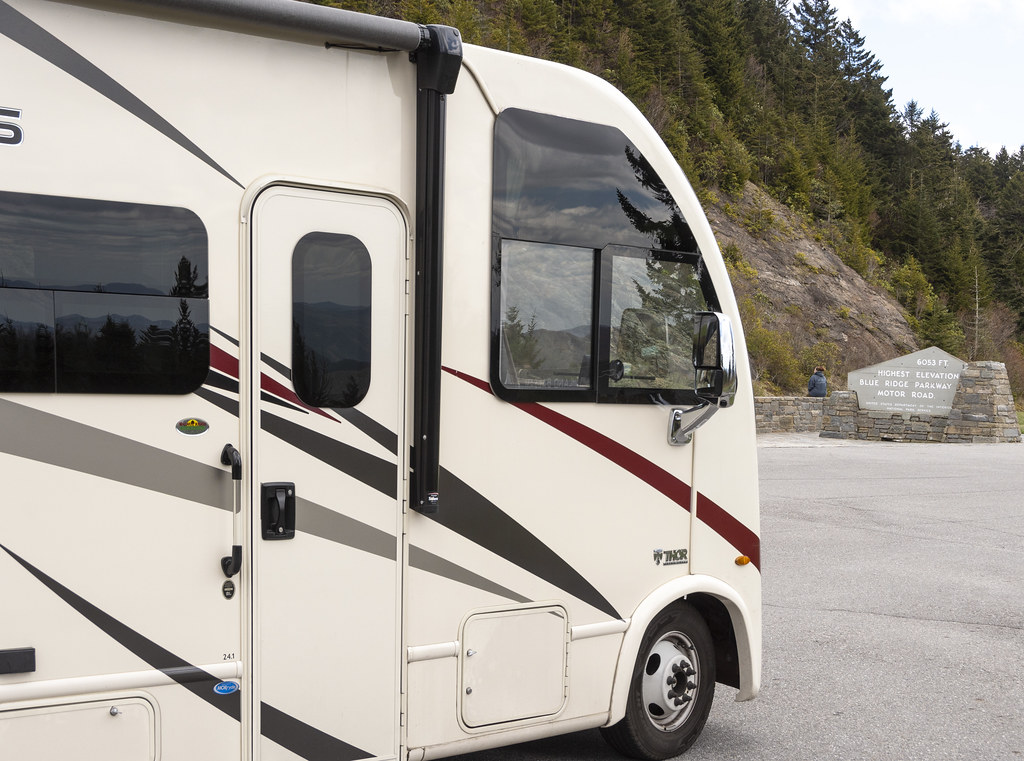
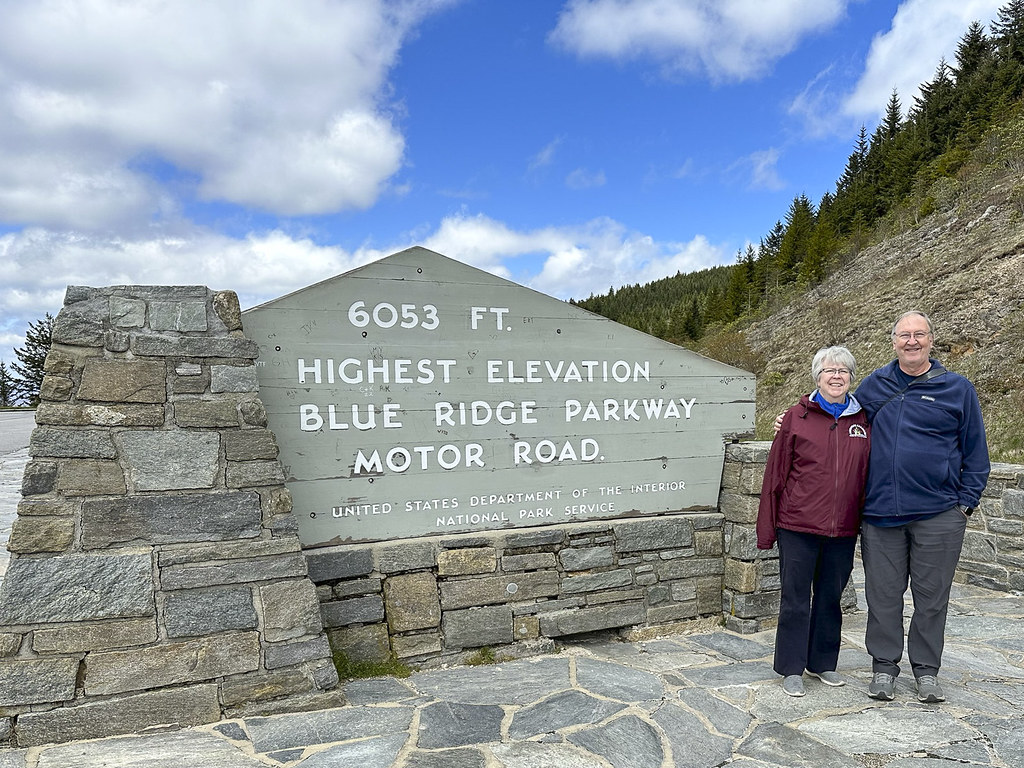
We (and the RV) made it to the highest point on the Blue Ridge Parkway at 6,053′.
It was a cool spring morning when we left Cherokee. The rocks along the parkway had little waterfalls of melting water. Up here the rocks were covered with sheets of ice and icicles. We didn’t see it snow but people at the Pisgah Inn where we had lunch said it snowed the night before.


The photo on the left is from “Waterrock Knob” Visitors Center when Becky and I visited 10 years ago in September 2013. Our plan then was to visit Smoky Mountain NP and drive the Blue Ridge Parkway… but, because of the fog, we got this far and decided to just come down out of the mountains and drive east to visit Kitty Hawk.
The weather in 2023 was wonderful. The photo on the right is from the same place (Waterrock Knob Visitors Center) but looking a bit to the ‘left’ of the 2013 photo.
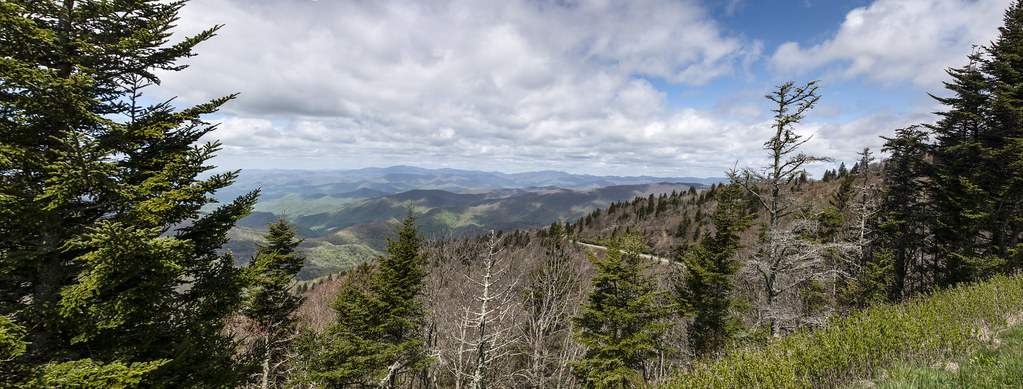
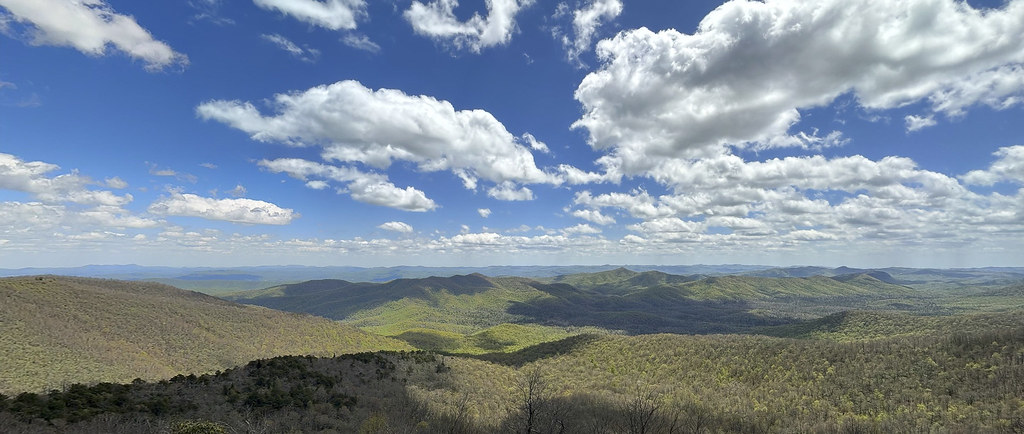


We stayed at the Asheville East KOA for the night then visited the Ashville BRP Visitors Center and the Folk Art Center the next day.


Entry to Asheville Blue Ridge Parkway Visitors Center




The Folk Art Center is incredible. It is home to the Southern Highland Craft Guild. The woodworking, quilting, textiles, carving, wheat weaving, pottery, etc., etc. is mind-blowing, beautiful, best-of-the-best stuff. This is a “must visit” place. I was thinking that visiting Biltmore was the most impressive thing to do in Asheville. The Folk Art Center may top that.
 DADart Photography